
Jan 2, 2026
Elle Morgan

Revenue teams are operating in a very different reality than they were even a few years ago.
Products evolve constantly. Buying groups are larger and less linear. Conversations span more channels. And sellers are expected to respond in real time while juggling more context, more signals, and more change than ever before.
Yet many enablement and sales workflows were designed for a slower world. Knowledge lives in static repositories. Coaching arrives after the moment has passed. Engagement signals are captured, but rarely translated into action.
This is where Digital Sales Rooms (DSRs) have gained traction. At their best, DSRs help teams centralize deal content, guide buyers, and understand engagement across stakeholders. But as revenue complexity increases, many teams are realizing that content sharing alone isn’t enough.
The most effective DSRs today do more than host assets. They help sellers execute. They connect deal signals to guidance. And they surface the right content, next steps, and coaching at the moment a rep needs it.
That’s the lens we use to evaluate the best Digital Sales Room tools for 2026.
In this piece, you’ll learn:
What digital sales room software is and how it’s evolving
Why digital sales rooms outperform traditional sales tools in complex deals
Which capabilities matter most when evaluating a DSR in 2026
10 digital sales room platforms for better buyer-seller collaboration
Key takeaways for choosing the right solution based on your sales motion
What even is digital sales room software?
A Digital Sales Room (DSR) is a shared, buyer-facing workspace designed to support collaboration throughout the sales cycle. It brings together deal-specific content, messaging, timelines, and stakeholders into one organized experience.
But not all DSRs are created equal.
Some function primarily as branded microsites or document hubs. Others layer in engagement tracking, personalization, and CRM integrations. And a smaller group is evolving into something more powerful: execution layers that help sellers act on real deal context as it unfolds.
As you evaluate tools, the difference between a place to share content and a system that accelerates deal execution becomes increasingly important.
Why digital sales rooms outshine traditional sales tools
As deals grow more complex, traditional sales tools start to fall short.
CRMs, email threads, and document-sharing platforms were built to store information and support internal workflows. They weren’t designed to guide buyers, surface engagement signals, or help sellers respond in real time.
Digital Sales Rooms fill this gap by bringing all deal-related content and communication into a single, structured, and trackable workspace. Instead of scattered tools and guesswork, both buyers and sellers gain clarity into where a deal stands and what should happen next.
Here’s how traditional tools compare to modern digital sales rooms:
Tool | Primary purpose | Where it falls short |
Email threads | To exchange messages and attachments between buyers and sellers. |
|
Document-sharing platforms (e.g., Google Drive, Dropbox) | To store, organize, and share sales assets and documents securely. |
|
CRMs (e.g., Salesforce, HubSpot) | To record customer data, track the pipeline, and monitor internal sales activity. |
|
Six important features a Digital Sales Room should have
Most Digital Sales Room tools advertise a similar checklist of features. The real differentiator is how those capabilities show up in practice and whether they actually change seller behavior during live deals.
Here’s what to look for when evaluating a DSR in 2026:
1. Content activation, not just content hosting
A strong DSR ensures sellers share the right content for each deal, keeps messaging current, and prevents outdated or off-message materials from reaching buyers. Governance and freshness matter as much as availability.
Engagement signals that translate into action
Tracking views, clicks, and time spent is useful only if it informs next steps. The best DSRs connect engagement signals to recommendations, follow-ups, or coaching prompts that help reps act quickly.
3. Embedded delivery in the flow of work
If sellers have to leave their daily tools to manage a deal room, adoption suffers. Look for solutions that surface deal rooms, insights, and guidance directly inside tools like CRM, email, or collaboration platforms.
4. AI powered by trusted, governed knowledge
“AI-powered” only works when models are fueled by curated, authorized content. Effective DSRs use use AI to recommend relevant content including what to share, when to share it, and how to move a deal forward, without introducing risk or hallucination.
5. Clear connection to pipeline and revenue
Engagement data should roll up into meaningful outcomes. Strong platforms help teams understand how deal activity influences pipeline progression, deal velocity, and win rates.
6. Buyer experience that supports complex decisions
Modern deals involve multiple stakeholders and long timelines. DSRs should make it easy for buyers to navigate information, align internally, and move forward with confidence.
How we chose the tools on this list
When evaluating digital sales room platforms, we looked beyond surface-level features to understand how each tool supports real buyer-seller execution.
We prioritized platforms that help sales teams simplify collaboration, respond to buyer intent, and move deals forward with greater consistency. The factors we considered include:
Ease of use and adoption: We looked for tools that are quick to set up and intuitive to learn, so sellers spend more time with buyers, not in training.
AI and automation: We prioritized platforms that use intelligence to surface the right content, recommend next steps, and translate buyer engagement into real-time action.
Buyer experience: We evaluated each platform based on how well it delivers a smooth, transparent, and personalized journey for the buyer, from the first interaction to the signed contract.
Workflow integration: We selected DSRs that integrate seamlessly with CRMs, email, and other systems sellers already rely on, reducing context switching and keeping everything in sync.
Scalability and flexibility: The tools on this list can handle that growth and support multiple teams, deal types, and workflows without breaking performance or usability.
Proven results — We only listed vendors with a clear track record of helping companies shorten deal cycles and boost buyer engagement.
10 digital sales room software for better buyer-seller collaboration
While many Digital Sales Room platforms offer similar core capabilities, they are optimized for different priorities.
Some excel at buyer presentation and collaboration. Others focus on planning, methodology, or commercial operations. A smaller group is designed to embed execution directly into seller workflows connecting buyer engagement, trusted knowledge, and guidance in the moments that matter.
The tools below reflect those differences.
Tool | Overview | Best for | Pricing* |
Spekit Deal Rooms | AI-powered workspaces where buyers and sellers can access all content related to a specific deal, including case studies, pricing sheets, product one-pagers, and sales decks. | Revenue and enablement teams that want deal rooms embedded in workflows, with content governance and analytics that reveal buyer engagement in real-time. | Available on request. Book a demo. |
Accord | A platform that embeds winning sales playbooks, methodology, and execution into every rep’s process. | Sales organizations that need to enforce sales methodologies and standardize deal execution. | Paid plans start at $99 per user/month (+ platform fee). |
GetAccept | DSRs, e-signatures, and buyer-engagement tracking to help reps guide buyers through the entire sales process, from sharing proposals to closing. | Sales teams looking to centralize the closing process from content delivery and buyer engagement to e-signing and contract management. | Free trial available. Paid plans start at $25/user/month. |
Dock | A flexible shared workspace that covers deal engagement through onboarding and renewals. | Revenue teams managing complex buyers and lifecycles who want one workspace for the entire sales process. | Free plan available. Paid plans start at $350/month (billed monthly). |
Aligned | Buyer-seller collaboration platform with Digital Sales Rooms, engagement analytics, and mutual action planning built in. | B2B sales teams with complex deals and multiple stakeholders that want a clean, collaborative buyer workspace. | Free plan available. Paid plans start at $29 per seat/month. |
Allego | An enablement platform with learning, content management, and digital selling workspaces. | Large or growing sales teams that need to improve sales readiness, coaching, and content use. | Available on request. |
Trumpet | Personalized Digital Sales Rooms (“Pods”) that streamline how you share proposals and content with buyers, and lead them down the sales funnel. | High-growth B2B sales teams who want to create visually appealing and interactive buyer workspaces quickly, | Free plan available. Paid plans start at £29 per user/month. |
Seismic | Enablement platform (Enablement Cloud) that combines sales content, learning, and digital sales rooms. | Large enterprises, especially in regulated industries, that need a comprehensive platform for content, training, and buyer rooms at scale. | Available on request. |
DealHub | End-to-end Quote-to-Revenue platform combining CPQ, DealRooms, contract lifecycle, billing, and subscriptions in one system. | Organizations scaling B2B revenue operations that require automation from initial quote all the way to renewal and billing. | Available on request |
Flowla | Personalized client workspaces (“Flows”) designed to connect the customer journey, from deal close to onboarding and renewals. | Growing B2B revenue teams that need to standardize and automate the full customer journey in one workspace. | Free plan available. Paid plans start at $49 per seat/month. |
1. Spekit Deal Rooms – Personalized buyer experiences in the flow of work
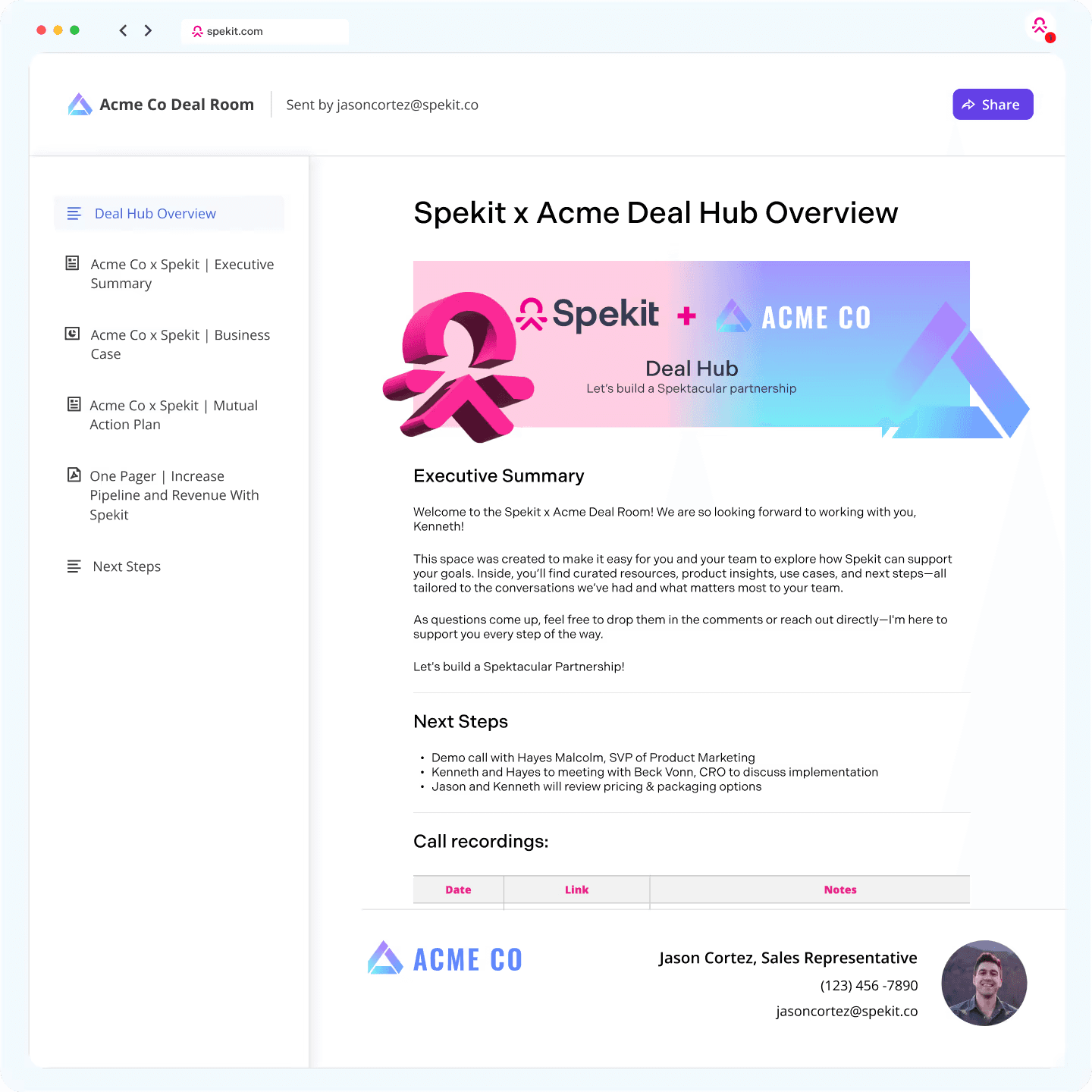
Spekit Deal Rooms are approached differently than standalone platforms. Rather than positioning deal rooms as a separate destination, Spekit embeds them directly into the tools sellers already use, while connecting every interaction to trusted knowledge, deal context, and next steps.
With Spekit, deal rooms can be initiated and accessed alongside workflows in tools like Salesforce, Gmail, or Gong. Sellers don’t need to switch tabs or manage another system. Content, messaging, and guidance appear where selling actually happens.
Spekit’s AI Sidekick uses curated, authorized enablement content to recommend what to share, when to follow up, and how to advance a deal based on real buyer engagement. As buyers interact with a deal room, signals are captured and translated into in-the-moment guidance for sellers, helping them move faster without guesswork.
Because Spekit is built on a governed knowledge engine, content shared in deal rooms stays current as products, messaging, and plays evolve. Enablement teams maintain control and consistency, while sellers gain confidence that what they’re sharing is always up to date.
Where Spekit stands out vs. standalone deal rooms
Created in the flow of work: Sales reps can create a deal room directly from the tools they use daily, like Salesforce or Gmail, without needing to log into a separate platform. This minimizes context switching and keeps them focused.
AI-powered content curation: Spekit’s AI Sidekick analyzes the deal context (e.g., deal stage, buyer role, recent call notes) to automatically recommend the most relevant and up-to-date sales materials. Reps can quickly tailor and brand the content using drag-and-drop or AI-assisted formatting.
Real-time content sync: The content in the deal room is automatically updated by syncing with existing repositories such as Google Drive or SharePoint. So, if a source file is updated, the latest version is instantly available in the room, ensuring buyers always have the most up-to-date information.
Buyer engagement insights: Spekit tracks how buyers interact with the shared content in real-time, providing detailed analytics on what is viewed, by whom, and for how long. These engagement signals help sales teams understand buyer intent, identify hidden stakeholders, and know exactly when to follow up with the right message.
Integration with enablement analytics: Because Deal Rooms are part of Spekit’s broader enablement platform, every interaction connects back to revenue outcomes. This gives leaders a clear view of which content is most effective at moving deals forward.
Other features of Spekit
Spekit is more than a digital sales room software. It’s an end-to-end revenue enablement platform that syncs all the content sales teams need to sell and surfaces it to them at the moment of need. Other features include:
Content Management System (CMS): Spekit’s CMS centralizes all sales and enablement content in one searchable hub, so reps can instantly access the right, approved materials without leaving their workflow.
Playlists: Curated content collections that guide reps through specific learning paths, such as onboarding, product updates, or new sales motions.
Knowledge Checks: Short, interactive quizzes that reinforce learning and help managers measure content retention and team readiness.
Speks: Bite-sized tooltips that deliver context-aware guidance directly inside apps like Salesforce, Slack, or Chrome, so reps get tips and resources without leaving their workflow.
Governance dashboard: A centralized view for enablement teams to monitor content health, freshness, and usage across departments.
Revenue insights: Ties content engagement directly to pipeline metrics, helping teams double down on the materials and training that truly impact revenue.
Spekit success story: Q4 Inc. reclaims 4,000+ hours quarterly with Spekit Deal Rooms
At Q4, Spekit helped increase seller adoption by 71% and drove a 23× increase in deal room engagement. By embedding deal execution directly into seller workflows and keeping content aligned with enablement strategy, teams were able to move deals forward more consistently and reduce friction across the sales cycle. Read the full case study here.
Spekit is best for: Teams that want deal rooms embedded directly into daily workflows, powered by governed knowledge and real-time guidance.
Spekit pricing: Spekit’s pricing is available on request. Book a demo to get all the details on pricing and to see the platform in action yourself.
2. Accord – Collaborative sales plans that align buyers and sellers
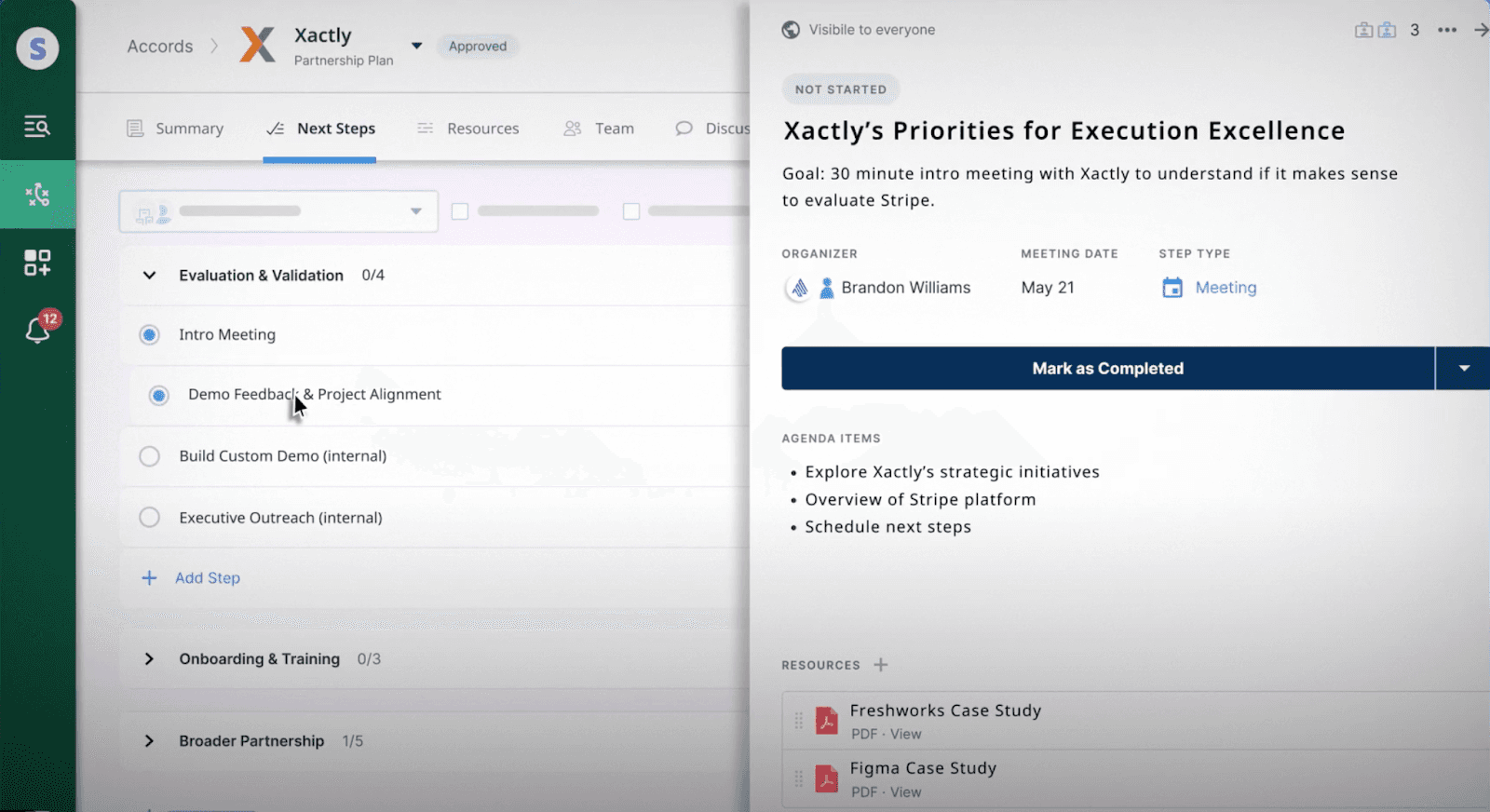
Accord helps sales leaders turn their best sales playbooks into repeatable, scalable processes.
Accord helps to embed proven frameworks (like MEDDPICC, SPICED, and Challenger) right into every stage of the sales cycle, ensuring that reps don’t miss any critical step or stakeholder.
By connecting methodology, content, and execution in one workspace, Accord bridges the gap between theory and practice, and helps teams close larger deals more consistently.
Key features of Accord
Content repository: A centralized, secure library for storing and sharing all your sales materials (e.g., decks, case studies, contracts) so reps get to use the latest versions without wasting time searching for content.
Playbook enforcement: Build and enforce sales playbooks using customizable templates for account plans, business cases, and onboarding. These help every rep follow top-performing frameworks, like MEDDICC or Challenger to a T.
Mutual Action Plans (MAPs): Create transparent, shared timelines with buyers to outline next steps and key deliverables. MAPs help both sides stay aligned, reduce friction, and prevent deals from going stale.
AI-powered guidance (Accord Intelligence): Accord’s AI assistant helps reps identify the right stakeholders easily, build tailored business cases, and suggest next best actions
Engagement tracking and analytics: Track how prospects interact with shared content (like time spent on proposals or viewed sections) to spot interest signals and adjust outreach with precision.
How Accord strengthens the buyer-seller relationship
Accord is well suited for organizations that sell using defined methodologies and want a structured way to manage deal plans, stakeholder alignment, and execution checkpoints.
Best for: Teams that want to operationalize sales methodologies through mutual action plans
Tradeoff: Accord is strongest at enforcing process and methodology, but teams looking for dynamic content activation, embedded deal guidance, or AI-driven recommendations may need complementary tools.
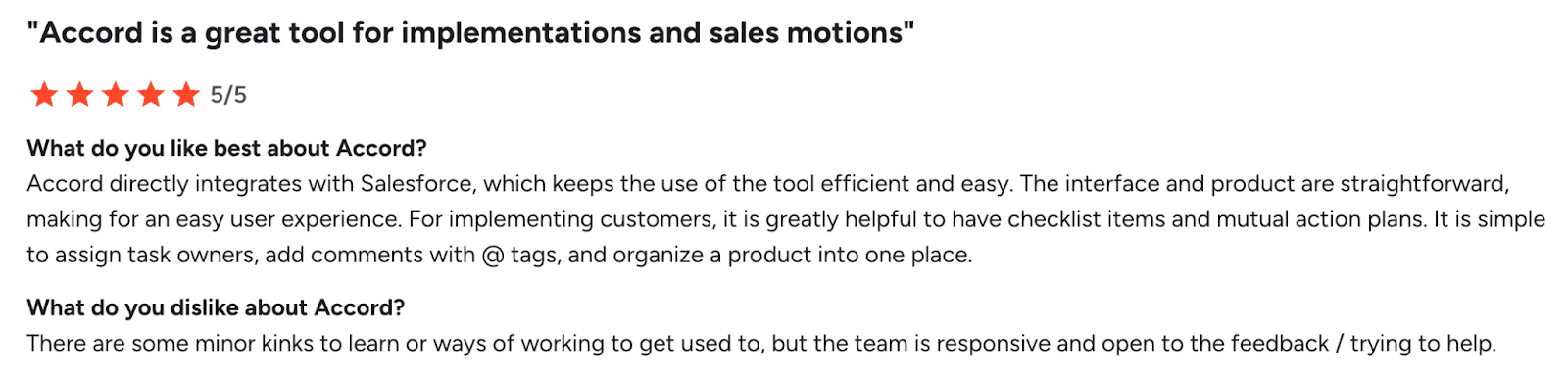
Customer review:
Pricing:
Accord has three pricing tiers:
Starter - $99 per user/month (+ platform fee)
Growth - $119 per user/month (+ platform fee)
Enterprise - Custom pricing
3. GetAccept – Digital sales rooms built for engagement and e-signatures
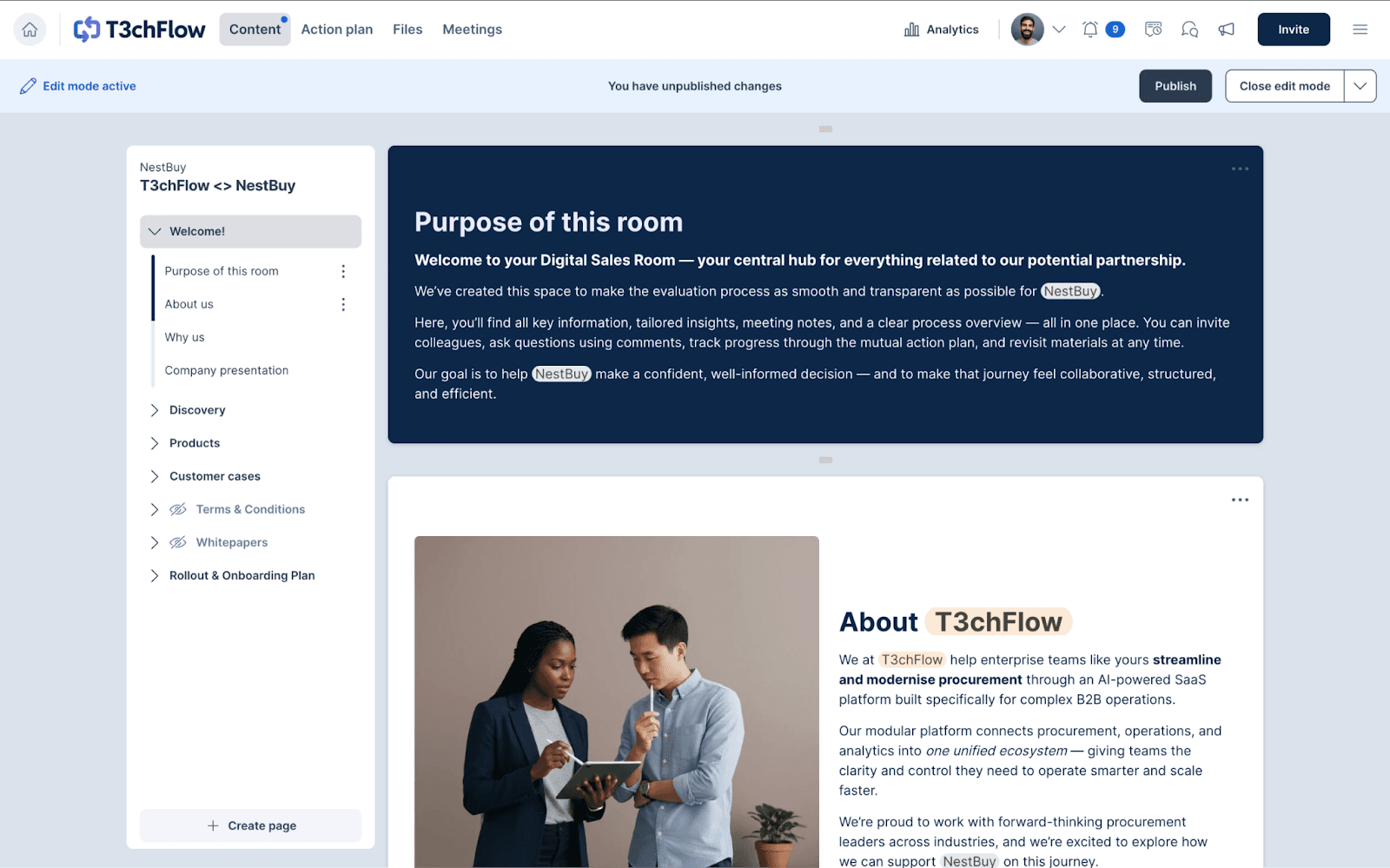
GetAccept is a sales enablement platform that gives sellers a single, branded digital space to house all sales materials, from the initial proposal to the final, legally binding e-signature. So, instead of juggling PDFs, email threads, and document links, both sellers and buyers can conduct deals in a digital sales room, making the experience smoother for both parties.
Beyond basic document sharing, GetAccept also embeds powerful engagement tools, like personalized video messaging and real-time tracking, directly into the DSR.
By centralizing the entire deal process (from content delivery and buyer engagement to contracting and e-signing), GetAccept helps sales teams eliminate context-switching, reduce administrative work, and ultimately shorten the sales cycle.
Key features of GetAccept
Sales content management: A unified, on-brand library for all sales and marketing materials (including whitepapers, case studies, and proposals), which ensures that every interaction is consistent, accurate, and easily shareable.
Digital Sales Rooms (DSRs): Create personalized deal spaces that serve as a single source of truth for every opportunity. Buyers can view videos, review proposals, and sign contracts in one place.
AI-powered sales tools (GetAccept AI): Built-in AI that summarizes meetings, drafts tailored business cases, and generates ready-to-send content, all based on real conversation data.
Electronic signatures and contract management: Provides secure, legally binding e-signatures that comply with GDPR and eIDAS. This is paired with robust contract management features that allow teams to store, categorize, manage renewals, and set reminders so they never miss a deadline.
Mutual Action Plans (MAPs): Collaborative roadmaps that outline key milestones and responsibilities, keeping both sides accountable and aligned throughout the deal cycle.
How GetAccept strengthens the buyer-seller relationship
GetAccept enhances buyer-seller relationships by turning the closing process into a single, cohesive experience.
Instead of forcing buyers to chase files across emails, sellers send buyers a link to a personalized Digital Sales Room that contains everything buyers need, be it content, videos, or contracts. This creates a frictionless journey that feels organized, transparent, and buyer-first.
GetAccept also helps sellers stand out through personalized engagement. Embedded video messaging adds warmth and authenticity to digital interactions, whether it’s a quick proposal walkthrough or a thank-you note.
These small touches humanize the sales process and help sellers build stronger emotional connections that lead to faster closes.
Best for: Sales teams that need to centralize their entire closing process, from content delivery and buyer engagement to e-signing and contract management.
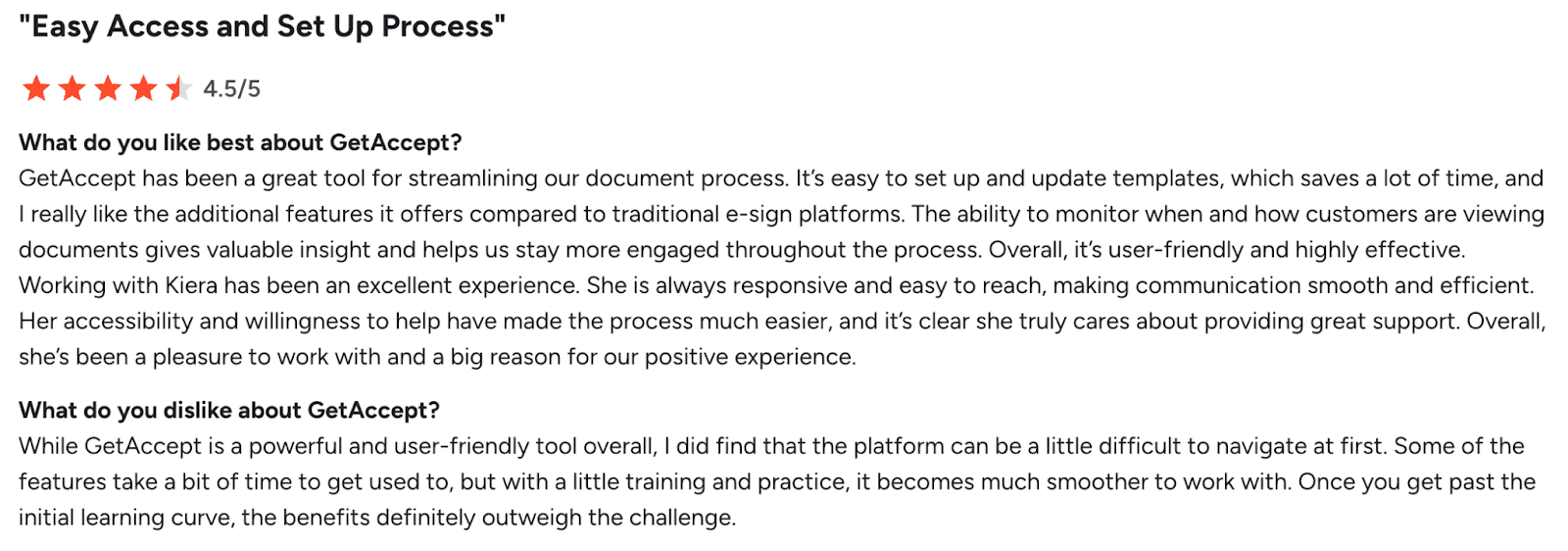
Customer review:
Pricing:
GetAccept offers a free trial. There are three pricing tiers (billed annually):
eSign - $25 per user/month
Professional - $49 per user/month (minimum five users)
Enterprise - Custom pricing
4. Dock – Interactive buyer workspaces that simplify onboarding and deal tracking
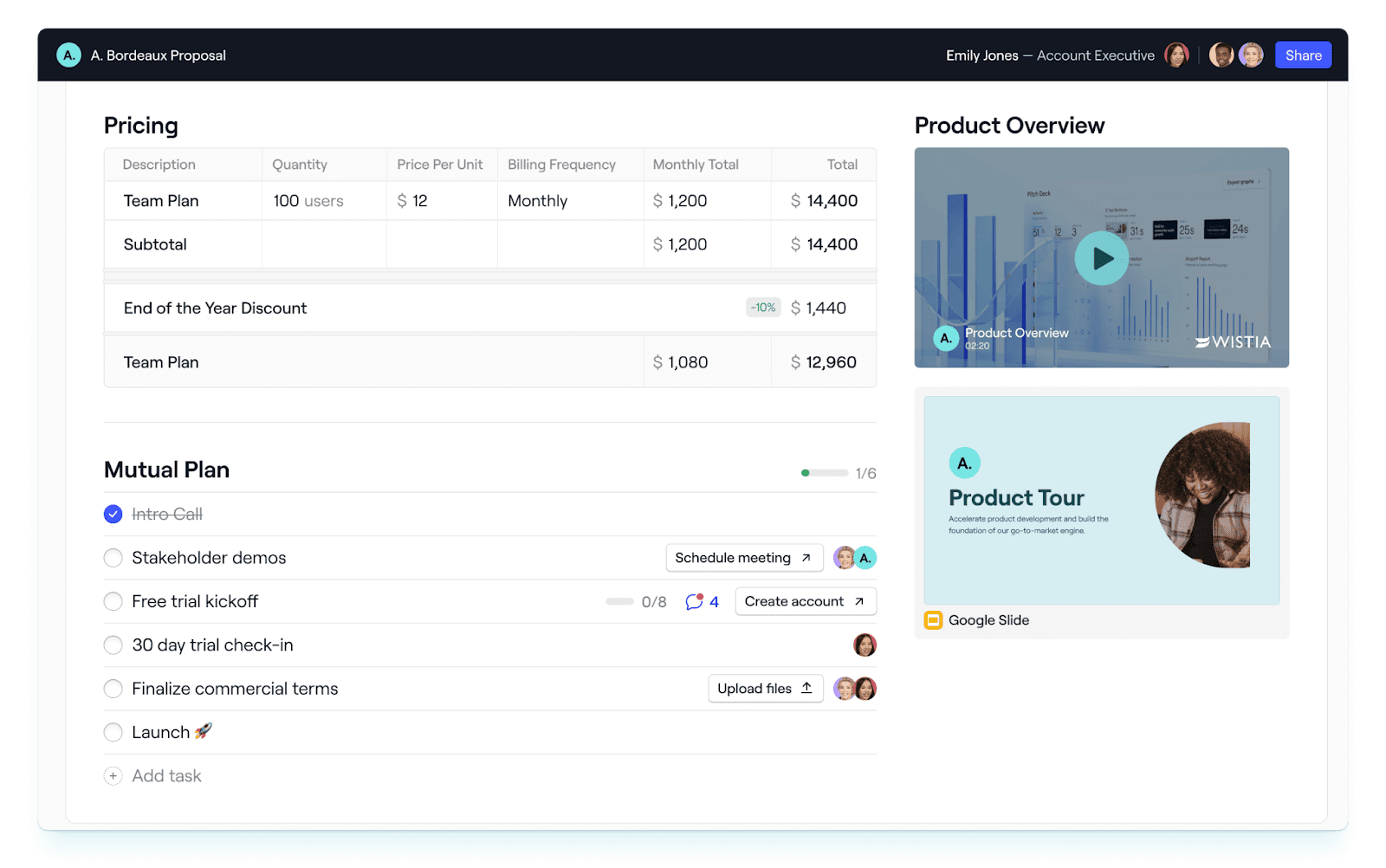
Dock is a platform that gives sellers and customer success teams a shared workspace to manage every stage of the customer journey, from first contact to renewal.
Dock consolidates all deal content, communication, project plans, and pricing information into one personalized, trackable space. This setup eliminates messy email threads and helps all stakeholders stay on the same page.
Key features of Dock
Unified content management: Keeps all sales and marketing materials (like case studies and pricing sheets)—organized in one place, ensuring reps always share the latest and most relevant content.
Custom-branded workspaces: Quickly build personalized digital sales rooms using templates that match your company’s visual identity.
Mutual Action Plans (MAPs): Use MAPs to define milestones, assign responsibilities, and set deadlines. This reduces confusion and helps complex deals move forward smoothly.
Signable order forms and proposals: Create dynamic, interactive pricing proposals and legally binding order forms right inside Dock. This eliminates the need for extra tools or email attachments.
AI Enablement Agent & AI Documents: Dock’s AI assistant can answer rep questions instantly, generate proposals and summaries from live CRM data, and pull insights from sales playbooks, all of which save time and maintain consistency.
How Dock strengthens the buyer-seller relationship
Beyond giving sellers and buyers a shared digital space to communicate, Dock transforms the sales process into a transparent, collaborative journey.
With Mutual Action Plans, every step, deadline, and responsibility is clearly outlined, replacing endless back-and-forth with structure and clarity. This approach positions the seller as a trusted partner while giving buyers confidence that the process is organized, fair, and fully under control.
Even after the deal is signed, Dock keeps the relationship going by turning the sales room into a client portal. The same shared space can host onboarding plans, implementation tasks, and renewal updates, creating a smooth handoff and a consistent, reliable experience that builds long-term trust.
Best for: B2B revenue teams that need a unified platform to manage the entire customer lifecycle, from initial engagement and proposal delivery to onboarding and renewals.
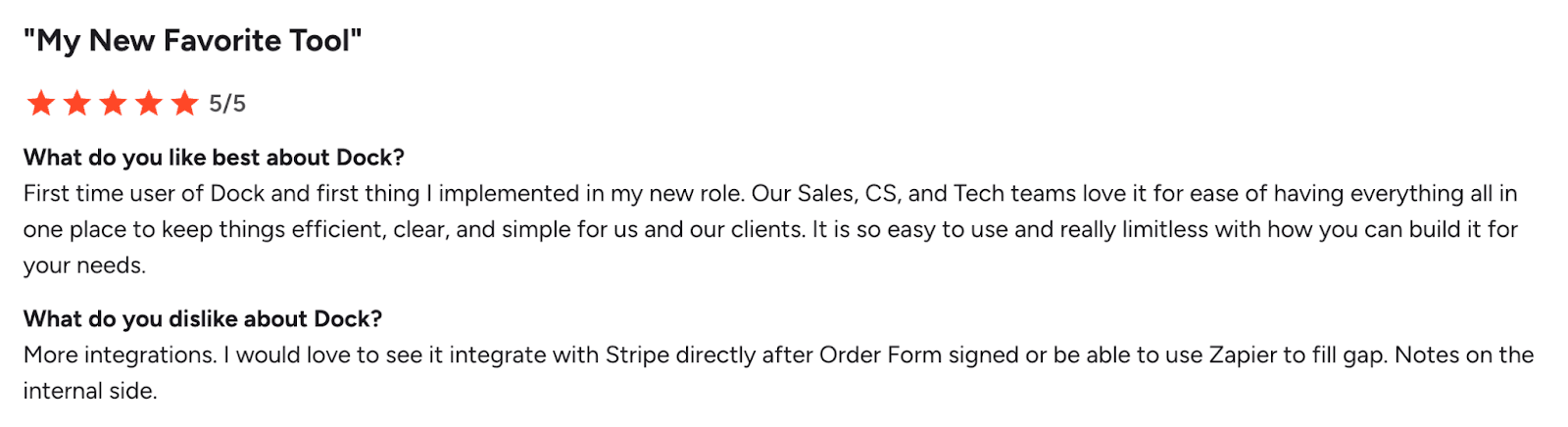
Customer review:
Pricing:
Dock offers a free plan. The paid plans are:
Standard - $350/month (billed monthly)
Premium - $750/month (billed annually)
Enterprise - Custom pricing
5. Aligned – Shared deal spaces that keep every stakeholder on the same page
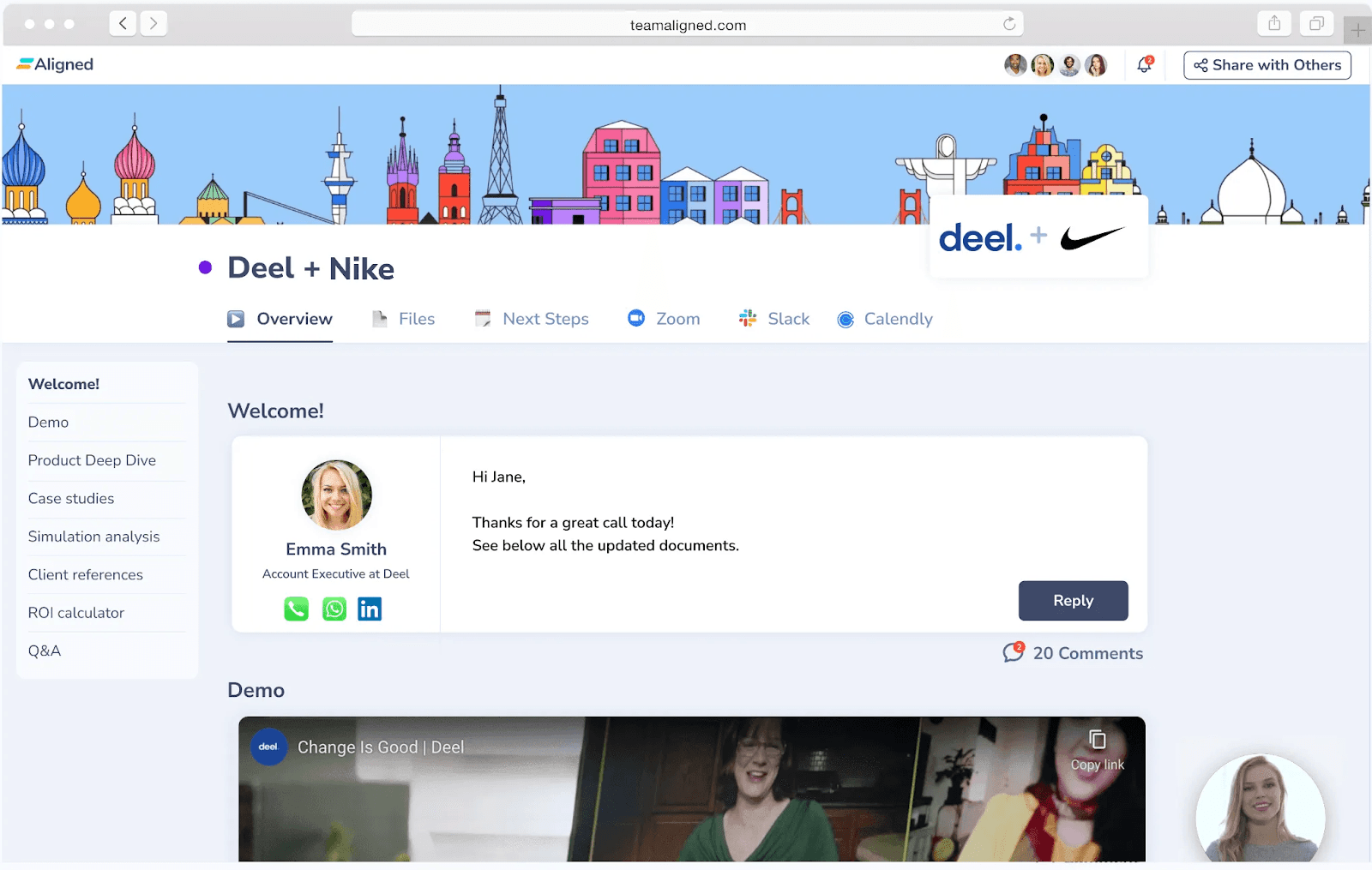
Aligned is a customer collaboration platform that brings every conversation, piece of content, and action item together in one place. By removing scattered communication and tool fatigue, Aligned creates a more focused and transparent experience that helps buyers make a confident decision.
Beyond centralizing deal assets, Aligned actively helps sellers understand buyer intent through real-time engagement data and provides AI-driven support for both buyers and sellers. With tools that guide collaboration, automate responses, and surface key insights, Aligned turns complex B2B selling into a smoother process for everyone involved.
Key features of Aligned
Digital Sales Room: Create a personalized, branded workspace that consolidates all deal-related content, timelines, and communication in one organized hub.
Mutual Action Plans (MAPs): Shared, interactive roadmaps that assign tasks and track progress for both teams, keeping deals structured and on schedule.
AI-powered buyer intelligence: Real-time analytics that reveal who’s engaging with content, when, and how. This helps sellers identify buying signals, hidden stakeholders, and the right time to follow up.
AI Copilot/Assistant: An embedded AI agent that can instantly answer buyer questions using existing playbooks and deal data. This improves response times and supports a self-service buying journey.
Customizable templates and workflows: Pre-built, flexible templates for digital sales rooms, MAPs, and customer onboarding, which help standardize best practices across the sales team.
How Aligned strengthens the buyer-seller relationship
With Aligned’s Deal Rooms, buyers can explore content, timelines, and resources at their own pace, while sellers can guide them through a structured yet personalized experience. This simplicity and accessibility eliminate friction and the need for constant back-and-forths.
Also, Aligned’s Buyer Intelligence feature shows sellers exactly how and when buyers engage, which removes the guesswork from follow-ups. Sellers can tailor their outreach with precision, responding when interest is highest and focusing on what matters most to the buyer.
Meanwhile, the built-in AI assistant ensures that buyers receive instant answers to questions, which reduces delays and helps them feel supported.
Best for: B2B sales teams managing complex deals that need a centralized, collaborative platform to streamline workflows and accelerate the buying journey.
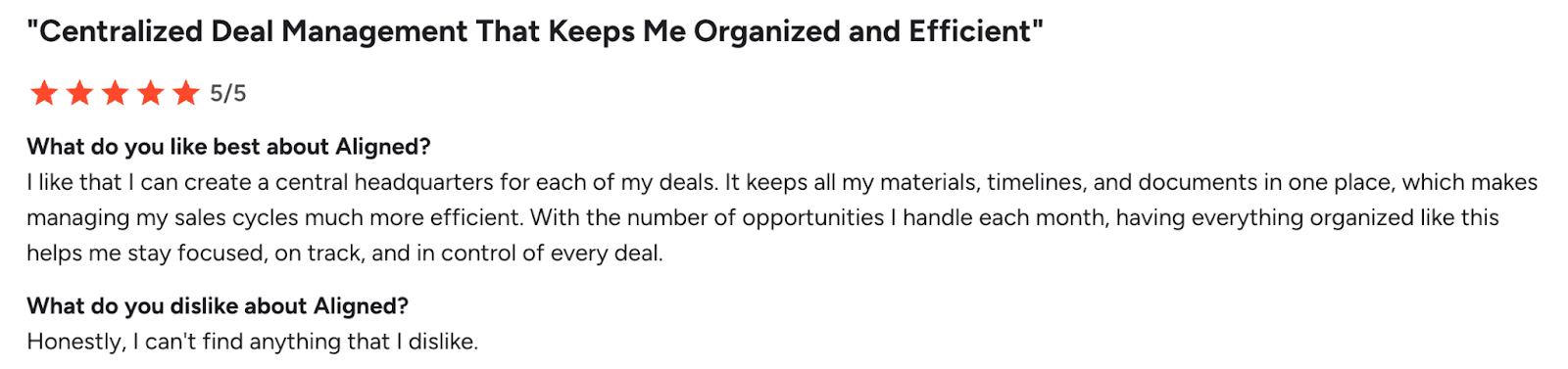
Customer review:
Pricing:
Aligned offers a free Starter plan. The paid plans are (billed annually):
Basic - $29 per seat/month
Pro - $49 per seat/month
Enterprise - Custom pricing
6. Allego – Content-driven enablement with strong video and coaching tools
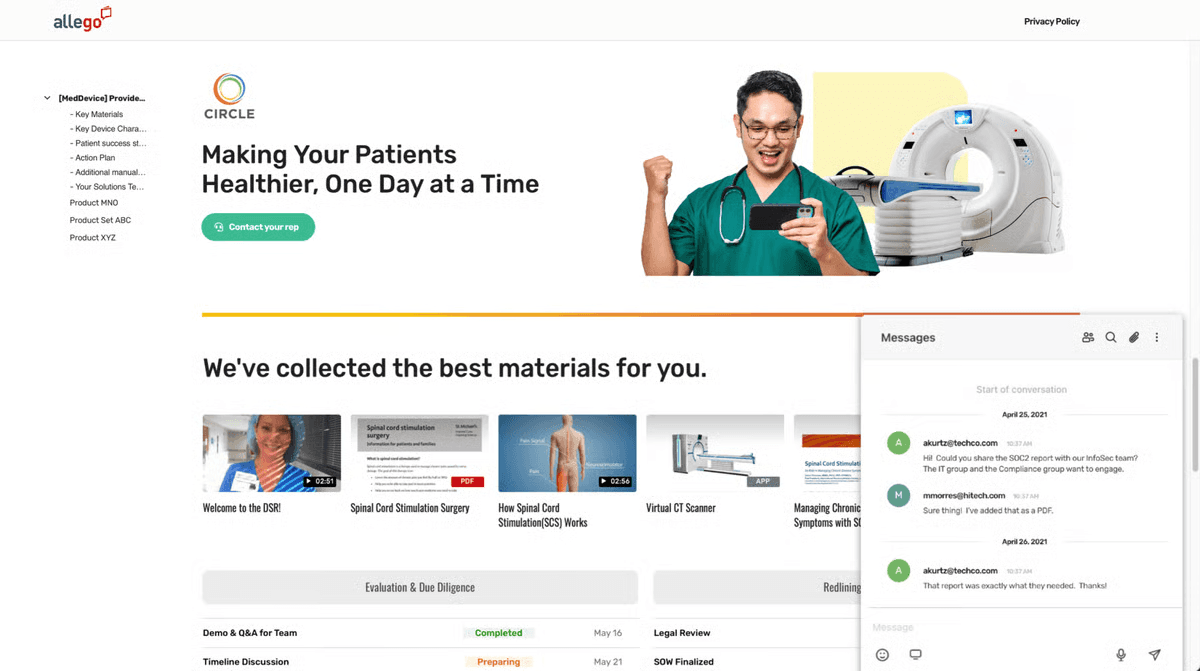
Allego combines learning, coaching, and content management in one system, so sellers not only have the right content but also know how to use it effectively.
By delivering bite-sized training, personalized coaching, and the right sales content exactly where the seller works (and where the buyer buys, through its Digital Sales Rooms), Allego empowers teams to follow best sales practices, speed up client onboarding, and close deals faster.
Key features of Allego
Sales readiness, learning & coaching: Delivers continuous learning through mobile-friendly, bite-sized modules. Reps can also role-play with AI coaches for real-time feedback, while managers get tools to scale personalized coaching across the entire team.
Sales content management: Centralizes, organizes, and governs all sales and marketing content so reps always share the most current, approved materials. It also provides analytics on how content usage correlates with deal progress and win rates.
Enablement AI: Provides reps with personalized recommendations on what to learn, what to share, and how to improve, based on their role, deal stage, and performance.
Conversation intelligence: Captures and analyzes sales calls to uncover key themes, buyer sentiment, and successful techniques. This helps teams replicate what works and close skill gaps faster.
Digital Sales Rooms (DSRs): Creates branded, secure spaces where sellers can organize all deal materials, like videos, proposals, and chat history, so buyers can easily access everything they need in one place.
How Allego helps improve buyer-seller relations
Allego helps sellers connect with buyers in a more personal and meaningful way. It allows sellers to welcome buyers with personalized videos and curated content. This creates a warm, human experience that builds trust early, especially in virtual selling environments where relationships can easily feel distant.
Allego also uses AI and conversation intelligence to make every interaction count. Sellers gain insights into what buyers care about most so they can tailor their approach to them, while managers can coach reps to communicate with clarity and empathy.
Best for: Large B2B sales organizations (especially in regulated or technical industries like financial services and life sciences) that need a single platform for content management, sales training, and digital selling.
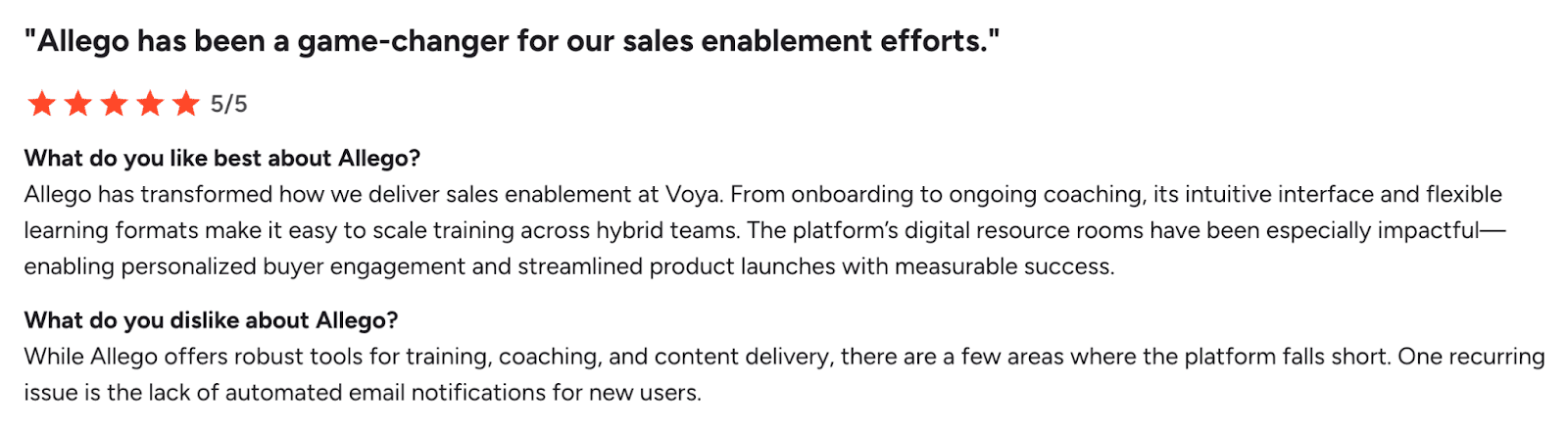
Customer review
Pricing: Allego’s pricing isn’t publicly available.
trumpet – Playful, customizable microsites for modern buyer engagement
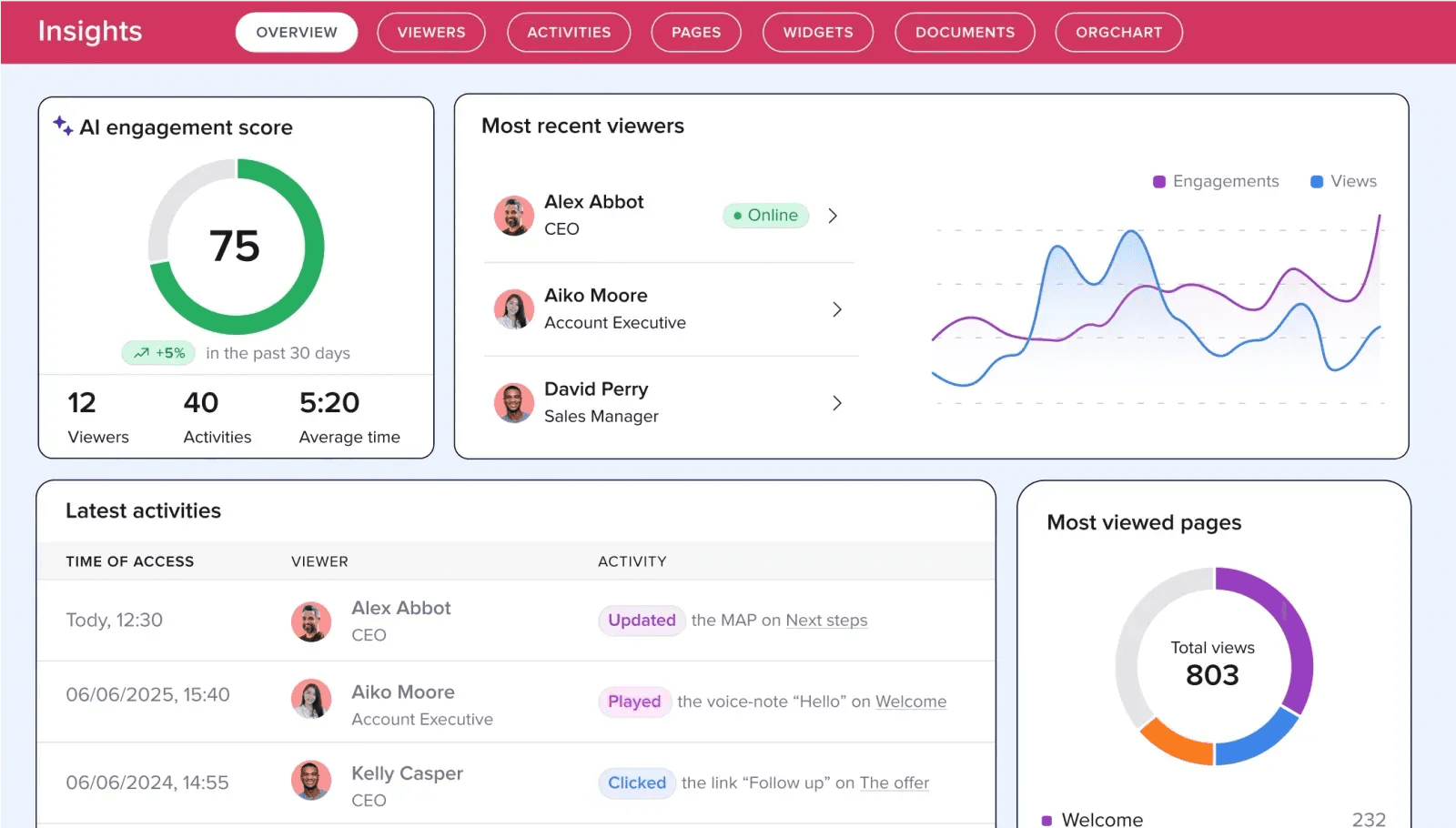
trumpet is a Deal Rooms platform for building beautiful, hyper-personalized micro-sites, called Pods. Each Pod serves as a central hub for proposals, videos, timelines, and updates, making the buying process easy to track.
With its drag-and-drop builder, trumpet empowers sellers to quickly create custom-branded, interactive Pods for every prospect. This single, organized link serves as the definitive source of truth, and facilitates a sales journey that feels smooth, transparent, and professional from first outreach to onboarding.
Key features of trumpet
Personalized Digital Sales Rooms (Pods): Create branded, interactive workspaces in seconds using AI and templates. Each Pod consolidates all deal materials into one unique, secure link for the buyer.
Mutual Action Plans (MAPs): Build shared roadmaps that outline next steps, assign responsibilities, and set deadlines to keep deals organized and moving forward.
Built-in asynchronous and live collaboration: Communicate directly inside the Pod using comments, video messages, or voice notes. This reduces email clutter and keeps conversations flowing even outside meetings.
Integrated e-signatures: Allow buyers to review, approve, and sign documents directly in the Pod, which streamlines closing and removes the need for separate tools.
Engagement analytics: Track how buyers interact with your content (like which sections they read or share) to uncover key stakeholders and follow up at the perfect time.
How trumpet strengthens the buyer-seller relationship
trumpet’s async collaboration features, like video notes and voice messages, add warmth and personality to the sales process. Buyers feel like they’re communicating with a real person, not just a name in their inbox. This personal touch builds familiarity and trust, helping sellers stand out in competitive, high-stakes deals.
On top of that, trumpet’s engagement analytics give sellers deep visibility into buyer interest. Reps can see exactly what buyers are viewing and when, allowing them to follow up with precision and focus on the deals that matter most.
Best for: High-growth B2B sales teams that need an intuitive, fast, and personalized digital sales room to improve collaboration and accelerate deal velocity.
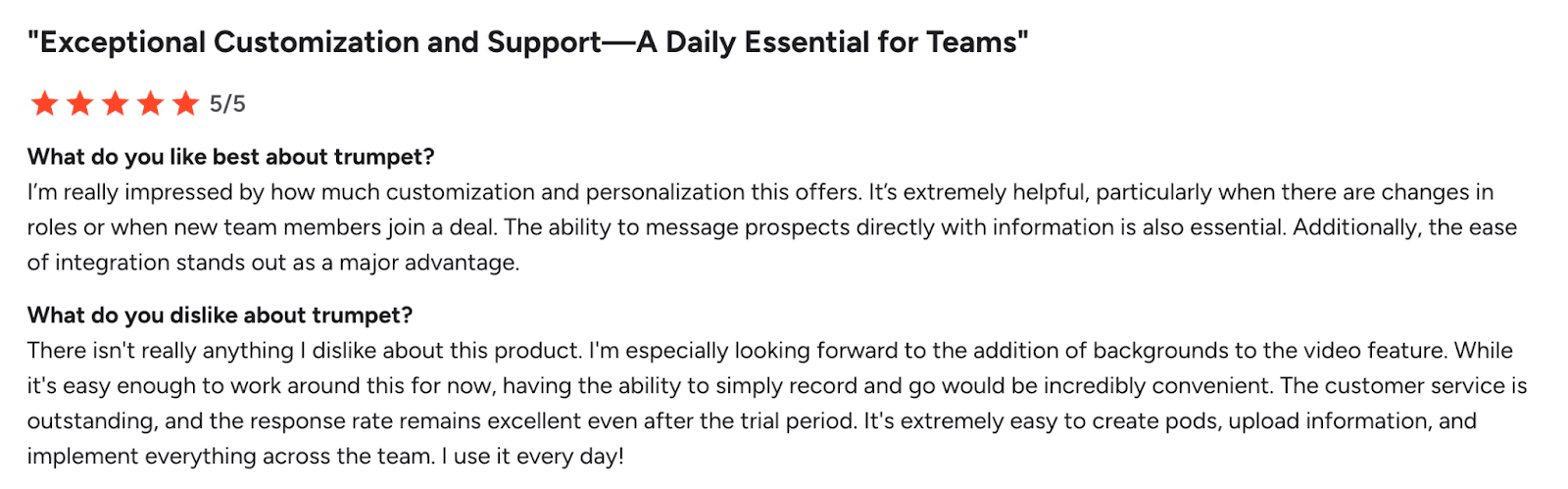
Customer review:
Pricing
trumpet offers a free plan. The paid plans are (billed annually):
Pro - £29 per user/month
Scale - £60 per user/month
Elite - £100 per user/month
8. Seismic – Enterprise-grade enablement platform with deep analytics and control
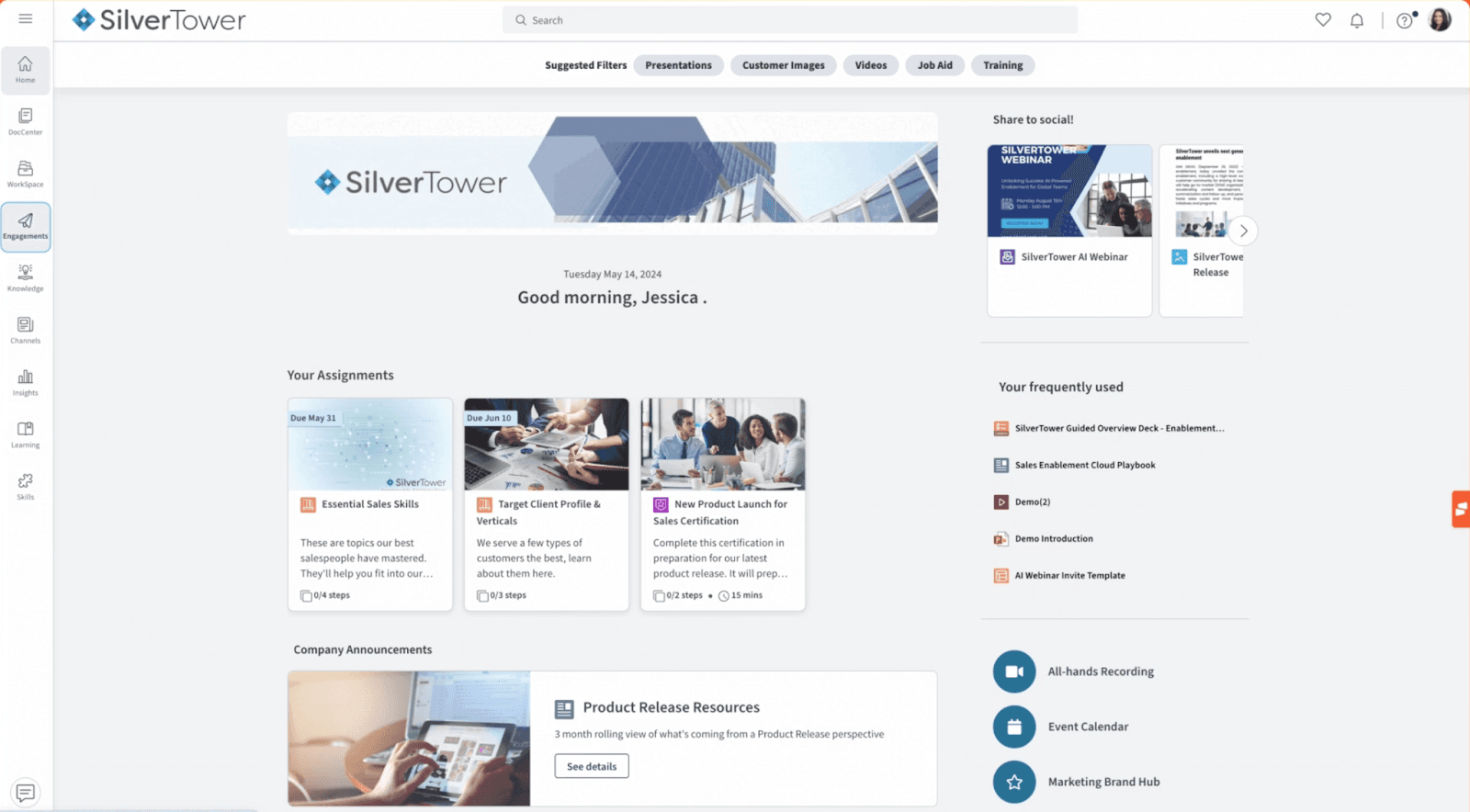
Seismic combines content, learning, coaching, and buyer engagement to help go-to-market teams improve performance and drive revenue growth.
It stores sales materials, training resources, and buyer interactions, which helps reps find the latest content, hone their sales skills, and keep a close eye on how deals progress.
Seismic’s DSRs provide a personalized and secure space where they can access tailored content, proposals, and updates without the hassle of back-and-forth email communication.
Key features of Seismic
Sales content management: A centralized, AI-powered content library that keeps all sales and marketing assets organized, searchable, and compliant, so reps always share accurate, approved materials.
Content automation and personalization: Automatically generates data-driven, branded documents, like proposals and pitch decks, customized for each buyer.
Digital Sales Rooms: Creates secure, branded workspaces where buyers and sellers can collaborate, share content, and track deal activity.
Learning and coaching: Offers personalized learning paths, bite-sized training modules, and AI-powered practice tools like role-plays and dialog simulations to help reps improve their performance.
AI-powered guidance (Aura AI): Acts as a virtual assistant that recommends the best content, surfaces key insights before meetings, and answers questions using organizational knowledge.
How Seismic strengthens the buyer-seller relationship
Seismic helps sellers connect with buyers by enabling them to deliver personalized, relevant content that speaks directly to buyer needs.
Seismic’s Digital Sales Rooms centralize all shared documents and communication in one workspace, buyers can easily access what they need, leave feedback, or ask questions directly. This two-way collaboration creates transparency and speeds up decision-making within the buying committee.
Best for: Large enterprises (especially in regulated industries like financial services or technology) that need a single platform to manage content, training, and buyer engagement at scale.
Tradeoff: With its breadth comes complexity. Teams prioritizing speed, lightweight execution, and embedded, real-time guidance may find implementation and ongoing management heavier than needed.
Pricing: Seismic’s pricing isn’t publicly available.
9. DealHub – All-in-one CPQ and deal room solution for revenue teams
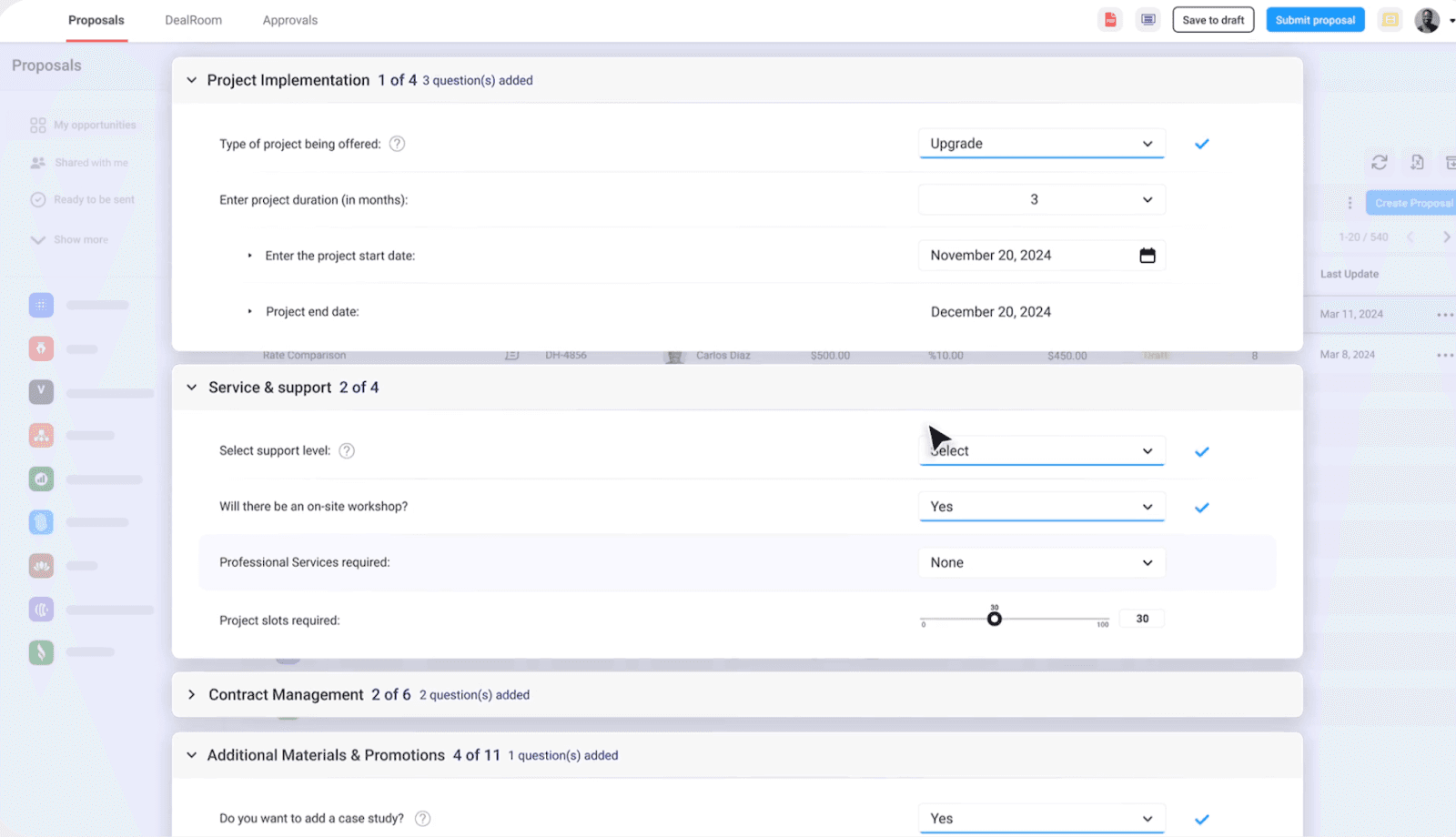
DealHub is a Quote-to-Revenue (Q2R) platform that unifies CPQ, CLM, Subscription Management, and Billing into a single system. It automates every step of the sales process, from configuration and pricing to contracting and renewals, helping teams work faster and more accurately.
DealHub aims to remove friction from both sides of the deal table, which is why it provides guided selling tools and collaborative deal rooms. For sales teams, that means shorter sales cycles and fewer bottlenecks. For buyers, it means clarity, convenience, and confidence in every stage of the deal.
Key features of DealHub
Configure, Price, Quote (CPQ): Guided selling playbooks and rule-based automation help reps build error-free quotes and proposals quickly.
DealRoom: Personalized, web-based workspaces where buyers can review proposals, pricing, and contracts in one place. Sellers get real-time insights into engagement, while buyers enjoy a smooth self-serve experience.
Contract Lifecycle Management (CLM) & e-signatures: Simplifies the creation, negotiation, and approval of contracts and agreements. It provides pre-approved templates, version control, and legally binding e-signatures all inside one workflow.
Guided selling playbooks: Embedded workflows within DealHub that guide sales reps through the optimal selling process based on deal context (e.g., industry, customer profile). These playbooks recommend the right products, content, and pricing for each deal.
Buyer engagement analytics: Tracks how buyers interact with shared materials, so reps can follow up with relevant information at the right time..
Subscription management & billing: Automates the management of recurring and consumption-based billing, renewals, and payment workflows. This ensures accurate revenue recognition and a frictionless customer journey from sign-up to renewal.
How DealHub strengthens the buyer-seller relationship
DealHub strengthens buyer-seller relationships by replacing fragmented deal management with a deal room where buyers can easily find proposals, pricing, and contracts. This organized experience reflects the seller’s professionalism and respect for the buyer’s time.
Additionally, because DealHub’s CPQ pulls data directly from the CRM, sales reps can generate quotes and proposals that align with each buyer’s specific needs, budget, and priorities. This shows buyers that sellers understand their business, which incentivizes them to convert into paying customers.
Best for: Scaling B2B organizations that need a unified, no-code platform to automate complex Q2R workflows, streamline proposals, and deliver a collaborative, modern buying experience.
Tradeoff: DealHub shines when commercial operations are the bottleneck, but it’s less focused on enablement-driven execution, knowledge governance, or in-the-flow coaching for sellers.
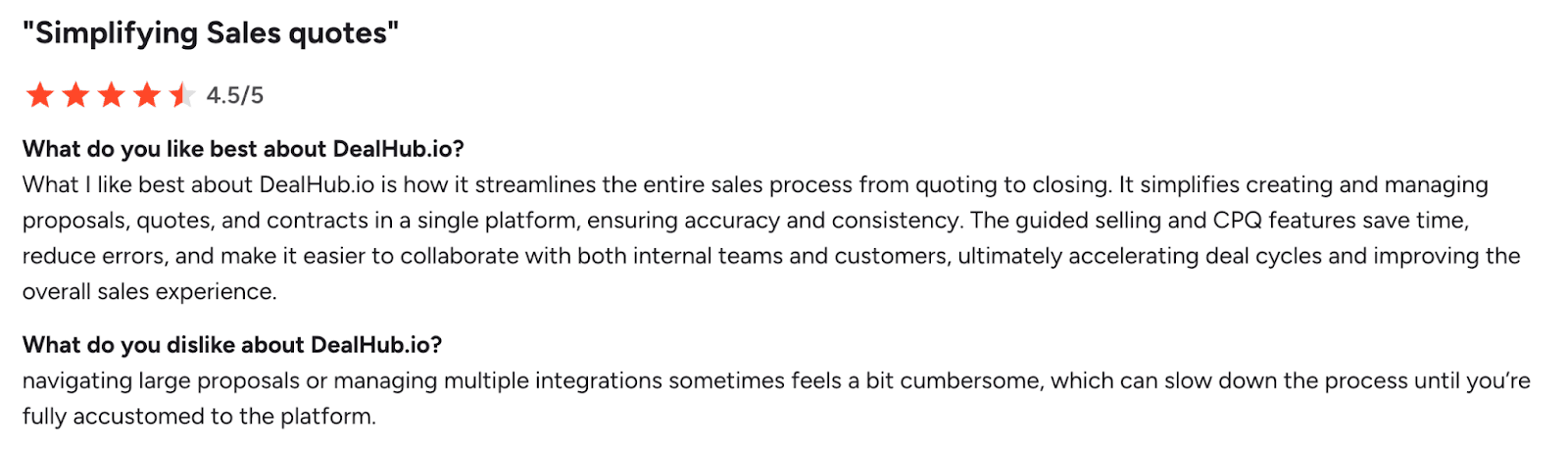
Customer review:
Pricing: DealHub’s pricing isn’t publicly available.
Read: 27+ Best CPQ Software & Tools
10. Flowla – Lightweight, no-code deal rooms designed for speed and simplicity
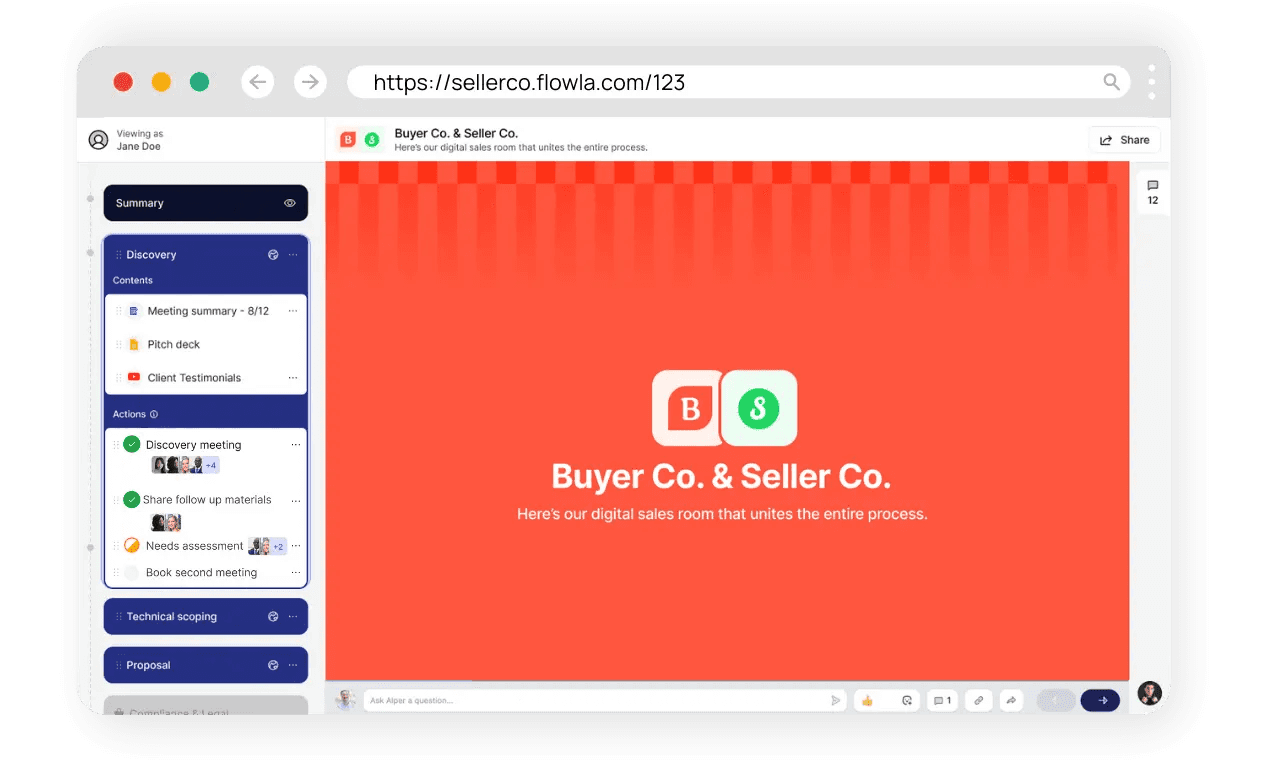
Flowla is a client-facing, collaborative workspace that streamlines and automates the entire customer journey, from the moment a deal is struck through successful onboarding and beyond.
The platform lets sales reps instantly create a personalized Digital Sales Room (called a “Flow”) that unifies all deal content, Mutual Action Plans, and communication in one place. Both buyers and sellers access this shared Flow through a single link, ensuring every client enjoys a clear, guided, and seamless experience.
Key features of Flowla
Personalized Digital Sales Rooms: Build custom-branded “Flows” that centralize documents, links, calendars, and resources, giving every stakeholder a single source of truth.
AI-powered automation engine (Flowla Autopilot): Automate routine tasks such as follow-up drafts, business case generation, and CRM syncing, then approve actions in a simple review queue.
Mutual Action Plans (MAPs) & project management: Allows teams to visualize the entire sales or onboarding process step-by-step. They can create collaborative checklists, assign owners (both internal and client-side), and set due dates, which drives mutual accountability.
Content management & embedding: Allows users to embed PDFs, videos, links, forms, etc. into the workspace using a drag-and-drop editor. This keeps all relevant materials organized and easily accessible in one place.
E-signatures and data collection: Capture legally binding signatures and collect required forms and documents inside the Flow, eliminating the need for external signature platforms.
How Flowla strengthens the buyer-seller relationship
Flowla enables sellers and buyers to build a shared Mutual Action Plan within a Flow. This clear roadmap outlines every task, owner, and deadline, which removes uncertainty and keeps both sides aligned from start to finish.
Furthermore, Flowla’s Autopilot and AI tools handle routine follow-ups and CRM updates, allowing sellers to focus more on forming strong relationships with buyers. Instead of juggling admin work, they can track how buyers engage with content in the analytics dashboard and reach out at just the right moment.
Best for: Growing B2B teams that want to automate and standardize sales and onboarding in one collaborative workspace.
Customer review:

Pricing:
Flowla offers a free Starter plan. The paid plans are (billed annually):
Pro - $49 per seat/month
Team - $79 per seat/month
Enterprise - Custom pricing
Read: 9 Best Sales Enablement Software, Tools & Platforms in October 2025
Spekit’s Digital Sales Room: Redefining how teams sell and buyers buy
Digital Sales Rooms are no longer just about sharing content. As revenue teams operate at increasing speed and complexity, the real differentiator is whether a platform helps sellers execute in real time.
The strongest solutions connect buyer engagement, trusted knowledge, and deal context into a single experience that shows up in the flow of work. They reduce hesitation, eliminate guesswork, and help reps take the right action in the moments that matter.
If your team is evaluating Digital Sales Room tools for 2026, look beyond surface-level features. Focus on how each platform supports execution, governance, and real outcomes across the entire revenue cycle.
To see how Spekit brings deal rooms, enablement, and real-time guidance together in one embedded platform, request a demo today.
Frequently Asked Questions
What’s the main benefit of using a digital sales room?
A digital sales room keeps everything about a deal, including the content, timelines, and communication, in one organized place. It helps sellers stay consistent and buyers stay informed, which leads to faster decisions and smoother collaboration.
Can digital sales rooms replace email in the sales process?
Not entirely, but they make email much more efficient. Instead of sending attachments or chasing updates, you can share one secure link with buyers. They’ll have all the materials they need in one space, and you’ll get visibility into what they’ve viewed and when.
How secure are digital sales rooms?
Most DSR platforms, including Spekit Deal Rooms, use enterprise-grade security, including encryption, permission controls, and content governance. That means only authorized stakeholders can access deal materials, keeping sensitive information safe.
How do digital sales rooms help buyers?
For buyers, a DSR removes confusion and clutter. They get a clear, professional view of the deal with all the information they need without having to scroll through long email threads or Slack messages. Digital sales rooms also make internal sharing and approvals much easier for them.
Why choose Spekit Deal Rooms over other digital sales room tools?
Spekit Deal Rooms are built directly into the tools your team already uses, like Salesforce and Gmail, so there’s no need to switch platforms. Our deal rooms are powered by AI that automatically recommends content, tracks buyer engagement, and connects every activity to revenue performance.
Learn more
Discover more from the latest posts.