Jan 2, 2026
Elle Morgan

The toughest part of sales enablement is not creating great training or building the perfect content library. It’s helping reps apply the right knowledge, message, and action in the moment that matters.
Traditional enablement breaks down fast. Onboarding happens once. Content lives in folders. Updates get shared in Slack and forgotten. Reps are left to piece things together while selling live deals.
Modern sales enablement software solves this by embedding learning, guidance, and content directly into daily work. Instead of searching, reps get contextual answers. Instead of guessing, they get direction. Instead of static training, they get continuous reinforcement tied to real deals.
In this article, we break down what modern sales enablement should look like and the best sales enablement software in 2026 for teams that want consistency, clarity, and execution at scale.
What sales enablement should look like for the modern sales team
Modern sales enablement is about alignment and execution, not just content distribution.
It connects people, knowledge, deal context, and actions so every rep, manager, and marketer operates from the same source of truth and moves with the same intent.
The old model of enablement built on slide decks, one-off workshops, and disconnected tools no longer works. Teams need enablement that is adaptive, embedded, and measurable.
Here’s what modern sales enablement looks like in practice:
Learning in the flow of work: Reps shouldn't have to leave LinkedIn, Gmail, Outreach, or their call tool to get help. Enablement should show up exactly where selling happens, delivering guidance in real time based on context.
Practice without waiting for a manager: AI-driven role-play and simulations let reps practice discovery, objection handling, and negotiation anytime. This builds confidence and muscle memory without slowing managers down.
Real-time feedback and coaching: Conversation intelligence tools surface insights before, during, and after calls, helping reps understand what worked, what didn’t, and how to improve next time.
Centralized and verified knowledge: Playbooks, processes, messaging, and content must live in one trusted system. No duplicates. No outdated assets. No guessing which version is correct.
Consistent buyer experiences: Digital sales rooms replace scattered emails with organized, trackable buyer experiences. Buyers get clarity. Sellers get insight.
Data-driven enablement: The best platforms connect enablement activity to revenue outcomes, showing which content, behaviors, and guidance actually move deals forward.
10 best sales enablement platforms for every stage of the sales cycle
From onboarding and coaching to buyer engagement and deal execution, each of the platforms below serves a distinct enablement role.
Tool | Best for | Standout feature |
|---|---|---|
Spekit | Revenue teams that want enablement to drive real execution in the flow of work. | AI Sidekick + embedded orchestration: Turns knowledge and context into real-time actions. |
Gong | Teams coaching from real customer conversations. | Conversation intelligence tied to deal outcomes. |
Allego | Large or distributed teams needing scalable video-based training. | Video learning and AI-driven coaching. |
Dock | B2B teams managing complex, multi-stakeholder deals. | Digital sales rooms with engagement insights. |
Guru | Teams struggling with scattered knowledge. | Verified knowledge cards delivered in workflow. |
Navattic | SaaS teams enabling self-guided product discovery. | Interactive, no-code demos. |
Second Nature | Teams scaling realistic sales practice. | AI role-play with dynamic feedback. |
Scribe | Teams documenting repeatable workflows. | Automatic step-by-step process capture. |
Clay | Outbound teams relying on data accuracy and personalization. | AI-powered prospecting and enrichment. |
Trumpet | Teams standardizing buyer-facing deal experiences. | Digital sales rooms with intent signals. |
Spekit – Agentic enablement that turns knowledge into execution in the flow of work
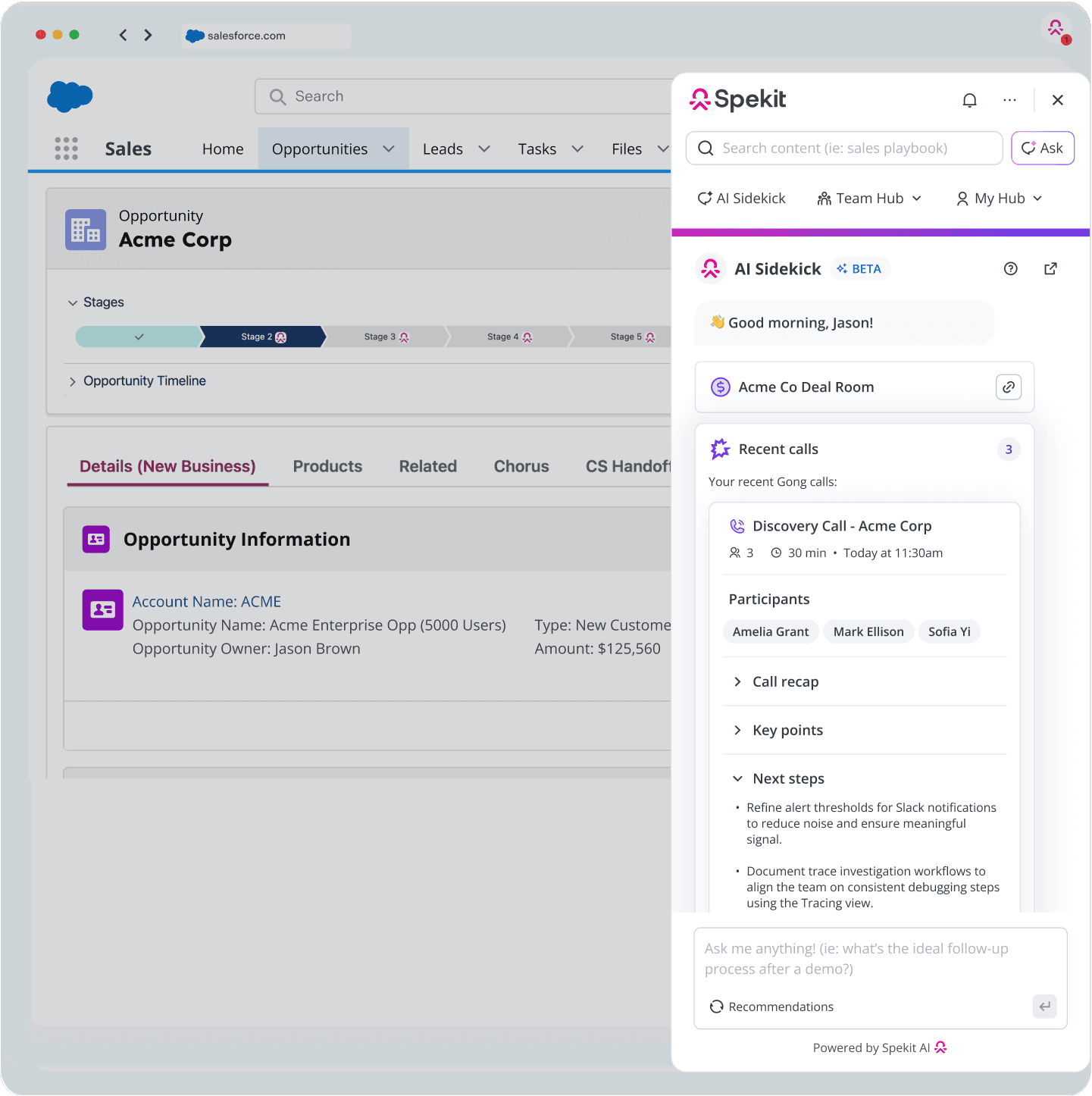
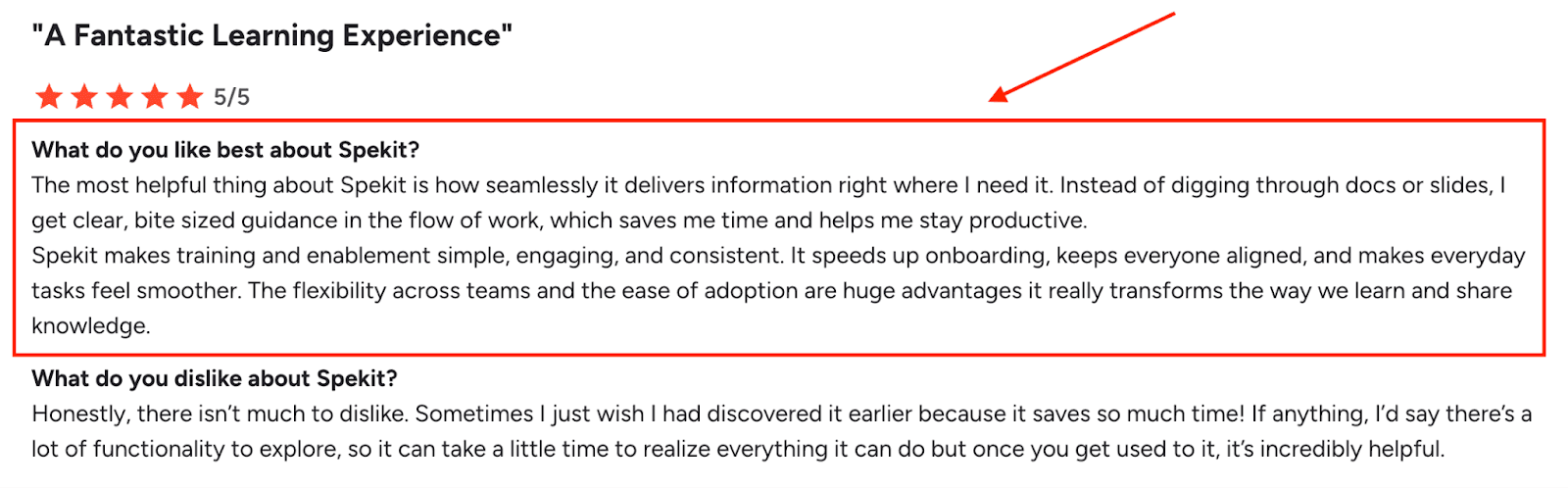
Spekit is an agentic enablement platform designed to close the gap between knowing and doing.
Instead of asking reps to search for answers or remember training from weeks ago, Spekit delivers real-time guidance, content, and next-best actions directly inside the tools reps already use, like Salesforce, Gmail, Gong, and and more.
This is enablement built for execution.
When a rep is updating a deal, writing an email, or preparing for a call, Spekit’s AI Sidekick uses context to surface exactly what they need in that moment. The result is faster decisions, consistent messaging, and cleaner execution across the entire revenue team.
Key features of Spekit
AI Sidekick: An always-on assistant that analyzes rep context and surfaces relevant guidance, definitions, messaging, or actions while work is happening.
Centralized CMS (Content Management System): A governed system for playbooks, processes, product knowledge, and messaging that stays current as the business changes.
Speks: Bite-sized, executable knowledge cards that break complex concepts into fast, usable guidance.
Playlists: Structured learning paths for onboarding, certifications, product launches, and methodology rollouts with built-in reinforcement.
Deal Rooms: Buyer-facing spaces that centralize deal content, track engagement, and support consistent buyer experiences.
Spotlights: Change management built into enablement. Push critical updates and confirm adoption without meetings or retraining.
Governance Dashboard: Visibility into content usage, freshness, and gaps so enablement teams maintain trust and consistency.
Revenue Insights: Connects enablement usage to performance outcomes so teams know what actually drives results.
How Spekit helps with sales enablement
Spekit embeds enablement directly into daily execution.
Instead of stopping at onboarding, Spekit reinforces knowledge continuously as reps sell. Guidance appears at crucial decision and selling touch points. Updates happen once and apply everywhere.
This reduces ramp time, improves consistency, and helps teams move faster without sacrificing quality or compliance.
Best for: Revenue teams who want to auto-sync content, personalize in real time, drive buyer execution, and measure revenue impact.
Customer review
Gong – Conversation intelligence platform that uncovers insights from every customer call
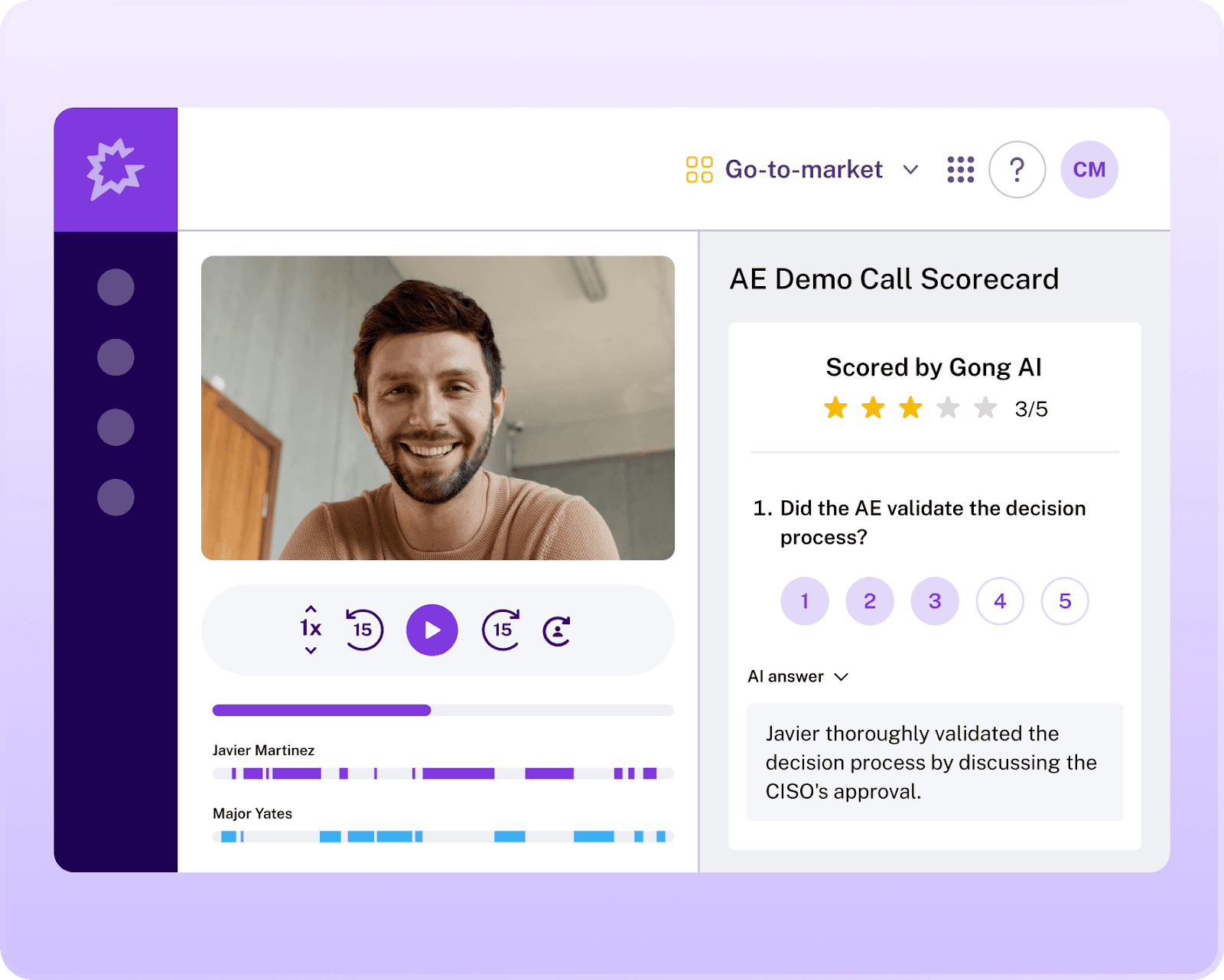
Gong is a conversation intelligence platform that captures and analyzes every customer interaction (i.e., calls, emails, and meetings) to reveal what really drives deals forward. By understanding what’s said and how it’s said, Gong gives teams a complete picture of their pipeline, deal health, and rep performance.
Instead of relying on guesswork, sales teams use Gong’s insights to make smarter decisions.
Reps get real-time feedback and next steps, while managers gain visibility into every stage of the buyer journey, helping them forecast more accurately and coach more effectively.
Key features of Gong
Conversation intelligence: Captures, transcribes, and analyzes every customer interaction using AI to highlight key topics, sentiment, and deal signals. Managers can spot what top performers do differently and use those moments to guide coaching.
Deal intelligence: Combines conversation and CRM data to give a live view of deal progress. It flags risks, uncovers stalled opportunities, and helps teams focus their efforts where they matter most.
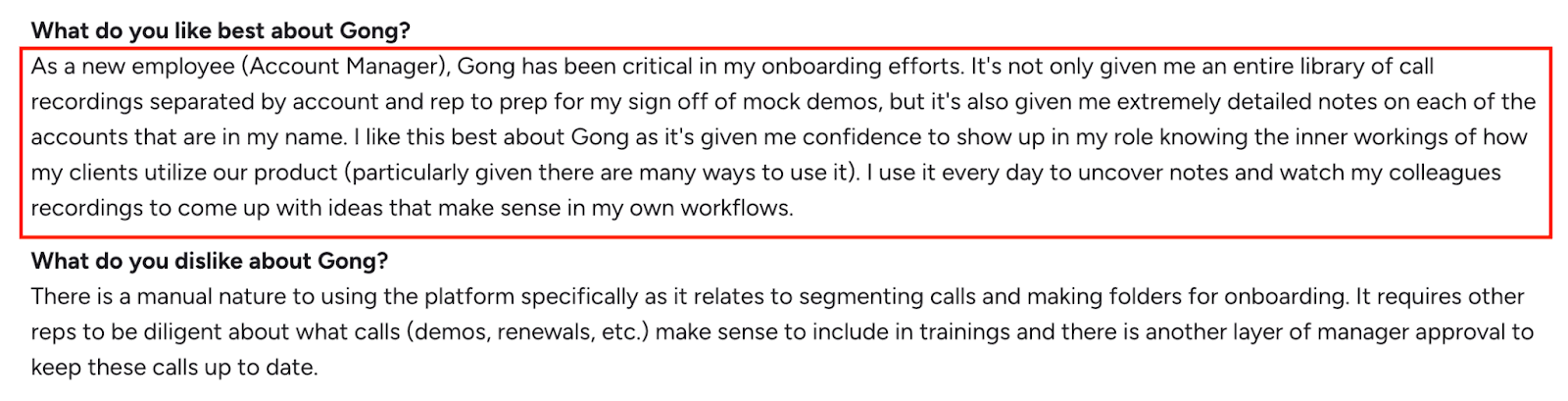
Coaching and onboarding: Builds a library of top-performing calls and best practices that managers can use for targeted coaching and feedback. This also shortens ramp time by giving new hires access to proven sales conversations and frameworks.
Market intelligence: Surfaces insights from customer calls about competitors, product feedback, and emerging buyer trends, which helps enablement teams keep content and messaging sharp and relevant.
Sales engagement (Gong Engage): Uses AI to identify the best prospects and suggest the most effective messaging for each one, helping teams build a stronger pipeline quickly.
AI automation (Gong Agents): Specialized AI assistants that handle repetitive administrative tasks like sending follow-up emails or updating contact details in your CRM. This frees up reps to focus more on selling than on grunt work.
How Gong helps with sales enablement
Gong enables sales reps by turning real conversations into personalized learning material. Through Gong’s insights, leaders can identify what behaviors or talk tracks lead to success and build targeted training programs around them. This way, sales reps can replicate what’s already proven to work in the field.
For managers, Gong removes the need to sit in on every call. The platform flags key coaching moments, from mishandled objections to stellar negotiation tactics, so managers can offer specific and actionable feedback. This helps reps improve faster, perform consistently, and build confidence with every conversation.
Best for: Organizations with medium to high sales call volumes that want to use AI and conversation insights to optimize sales performance, improve coaching, and gain deep customer and market insights.
💡If you already use Spekit, you can reinforce insights from your knowledge base in Gong. For example, if a rep mentions a competitor during a live call, Spekit can instantly surface a battlecard or key talking points right on their screen, helping reps respond confidently in the moment.
Customer review
Allego – Video-driven enablement for large, distributed teams
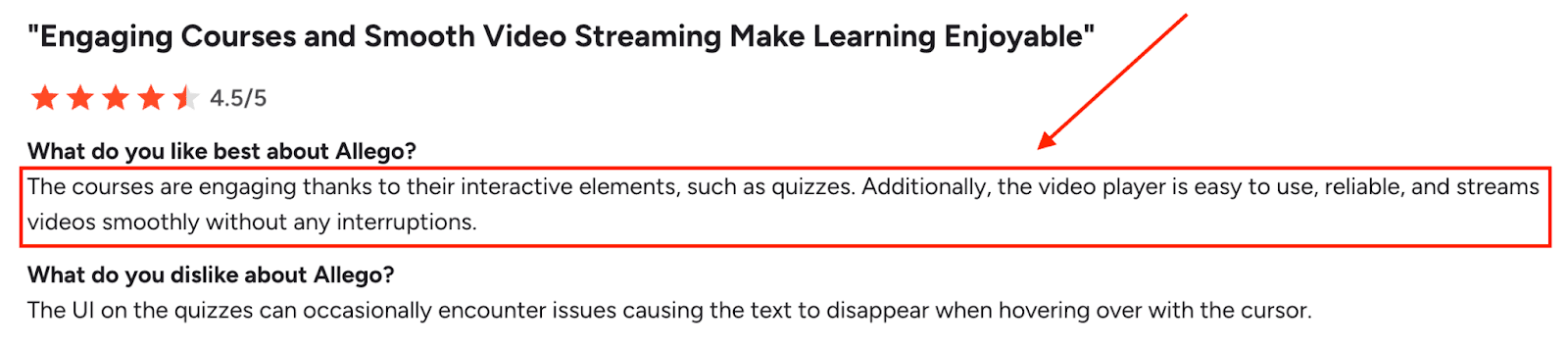
Allego combines content management, video learning, coaching, and practice into one platform built for scale.
It works well when teams need structured, repeatable training programs supported by AI feedback and analytics.
Key features of Allego
Sales content management: Centralizes all sales assets (like decks, battlecards, and case studies) into one organized, searchable hub. AI helps surface the right content at the right time based on deal stage, so reps always share accurate, up-to-date materials with prospects.
Sales coaching and readiness: Helps reps learn and practice their selling skills by blending video-based exercises, peer-to-peer feedback, and manager reviews. Reps can record pitches, receive personalized feedback, and refine their delivery, all within Allego.
Conversation intelligence: Transcribes and analyzes sales calls and meetings to identify key topics, sentiment, and buyer cues. These insights help managers tailor coaching and enablement programs based on real customer conversations.
AI role-plays & simulations: Gives reps a safe space to practice objection handling and messaging using AI-driven simulations. The instant feedback helps them build confidence and consistency before getting on actual calls.
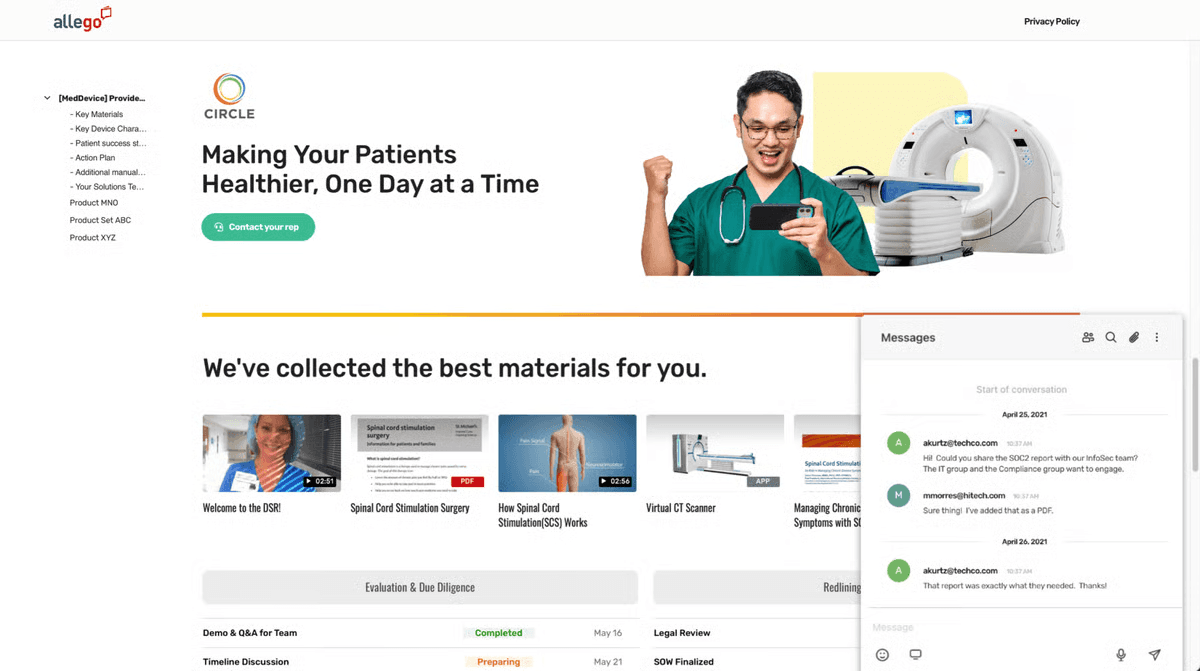
Digital Sales Rooms (DSRs): Creates personalized, trackable spaces for buyers to find deal-related content, watch demo videos, and communicate with sellers. Reps can see who’s interacting with what, so they can send timely and relevant follow-ups.
Analytics: Provides dashboards that connect training, content use, and coaching metrics to business results like win rates and revenue growth, giving enablement leaders a clear view of what’s working.
Best for: Large organizations running formal enablement programs across regions.
Customer review
Dock – Digital sales rooms that organize complex deals
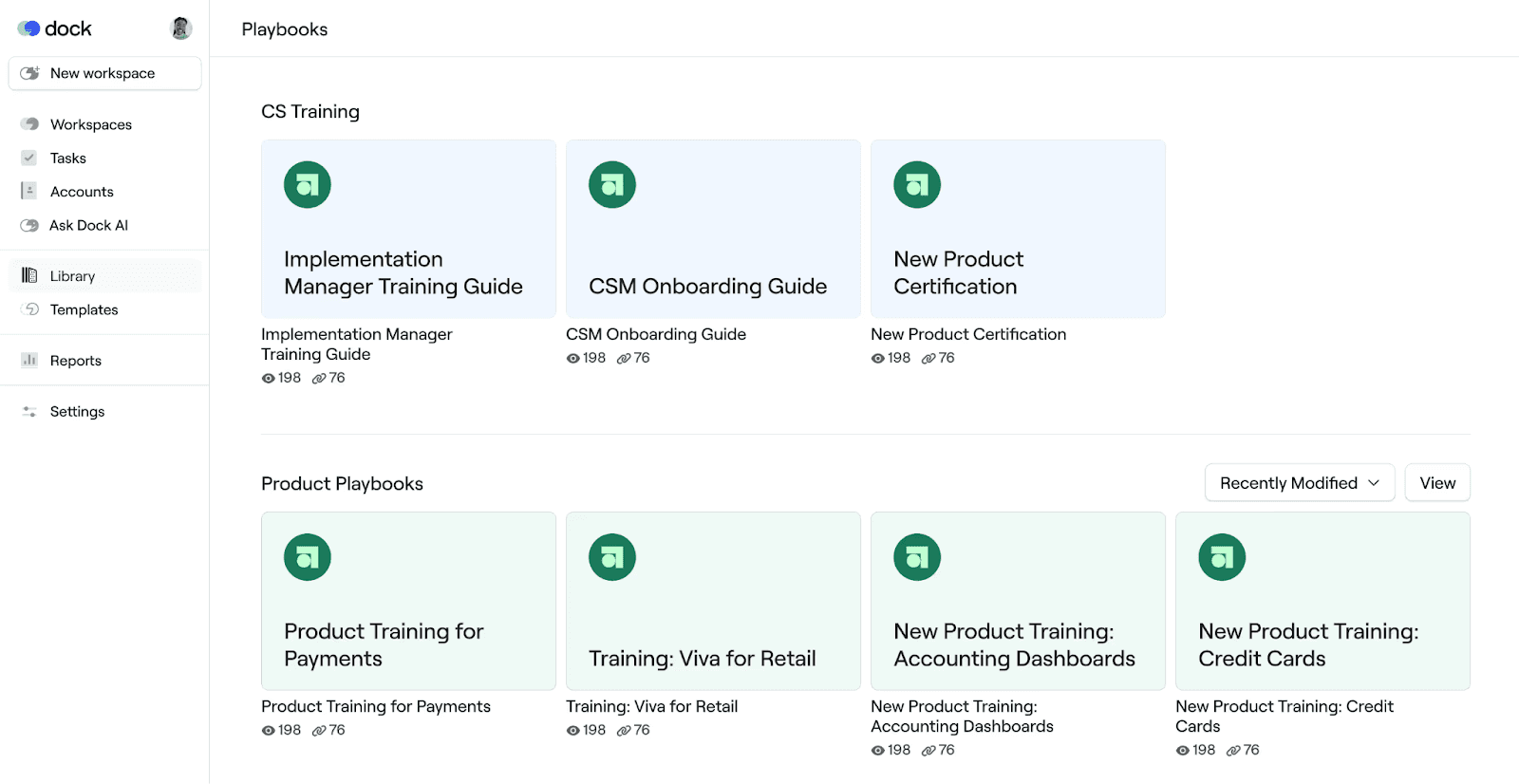
Dock replaces email chaos with structured buyer workspaces that centralize content, plans, and next steps.
It improves visibility into buyer engagement and helps reps manage multi-stakeholder deals more effectively.
Key features of Dock
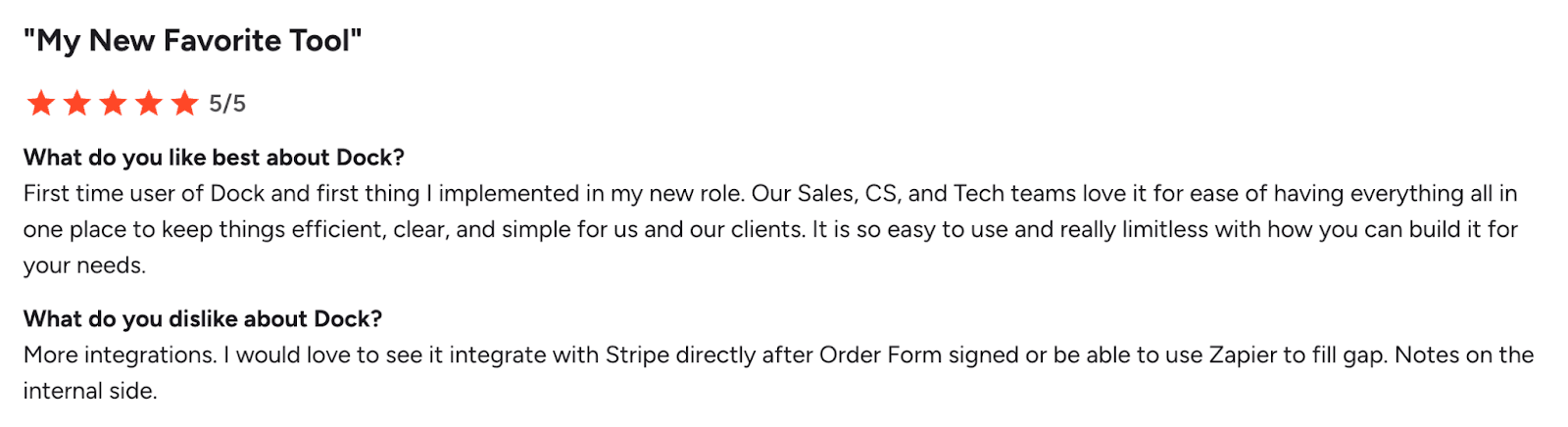
Digital Sales Rooms (Deal Rooms): Dock lets reps create branded, personalized portals for each buyer. Every workspace neatly organizes all the content related to a deal, including sales decks, pricing sheets, competitor battle cards, and mutual action plans into one professional hub.
Content management & playbooks: Stores all customer-facing assets (e.g., PDFs, videos, spreadsheets, links) in a centralized content library. It allows teams to create internal learning playbooks right alongside external content, so sellers know exactly what to share and when.
Mutual Action Plans: Shared project plans and checklists clearly outline next steps, responsibilities, and deadlines to keep deals on track and organized.
Engagement analytics: Tracks exactly how buyers interact with content inside the workspace: who viewed what, when, and for how long. These insights give reps real-time signals of buyer intent and deal health.
AI Enablement Agent: Automates repetitive tasks like creating proposals, follow-up emails, or competitive summaries. AI pulls from CRM data to keep documents accurate and personalized.
E-signatures and proposals: Streamlines the final stages of the sales cycle by allowing reps to create, send, and collect e-signatures directly inside the digital sales room.
How Dock helps with sales enablement
Dock makes sales enablement repeatable and consistent. Enablement teams can design reusable workspace templates for different deal stages or industries, so every rep delivers a professional, on-brand buyer experience. This consistency improves the brand image and speeds up the time a new rep takes to deliver sales materials.
Dock analytics also show managers exactly which stakeholders are involved, which assets resonate, and where deals are stalling. That visibility helps managers coach more effectively and allows reps to prioritize high-value actions instead of spending time chasing unresponsive leads.
Best for: B2B teams selling into complex buying committees.
Customer review
Guru – Knowledge management tool and interactive wiki
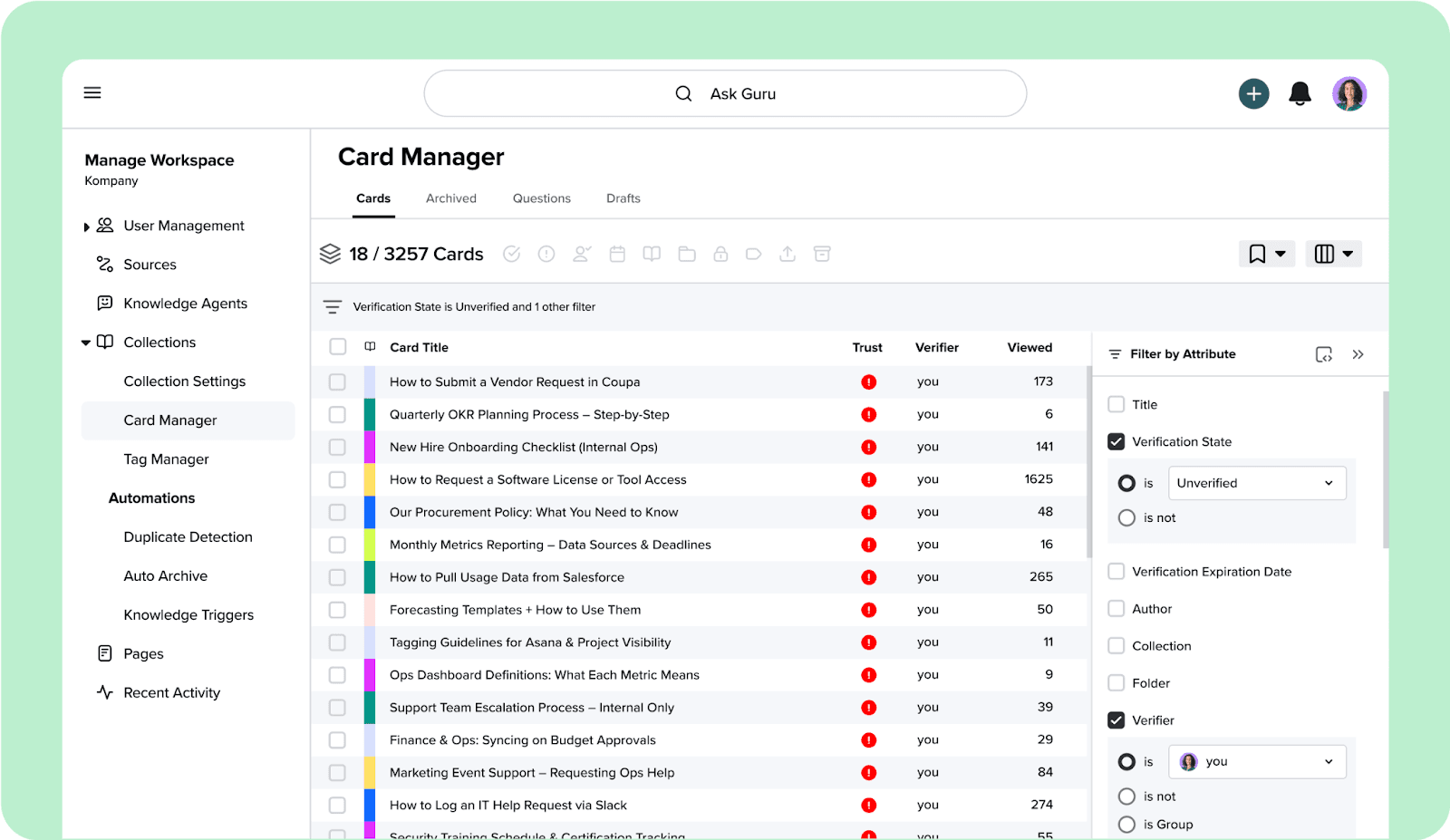
Guru acts as a single source of truth, delivering verified answers directly inside a rep’s workflow.
It reduces time spent searching and increases trust in shared information.
Key features of Guru
Knowledge Cards: Bite-sized, verified content blocks that store FAQs, battlecards, objection responses, or key product details. Reps can access cards instantly via Guru’s browser extension or directly in the tools reps already use.
Verification workflow: Keeps content accurate and trustworthy by assigning owners to each Card. Guru automatically prompts experts to review and re-verify information regularly, so reps never use stale or outdated information.
Usage analytics: Tracks which content reps view, search for, or share most often, so leaders can identify knowledge gaps, update underused materials, and understand exactly what information drives sales.
Workflow integration & browser extension: Surfaces verified information right inside a rep’s workflow — whether they’re in their CRM, Slack, or browser — so they can handle questions or objections without switching tools.
How Guru helps with sales enablement
Guru supports learning and content access. Instead of requiring formal training every time a product detail changes, enablement teams simply update a Knowledge Card, and that new information instantly appears for every rep who needs it, directly where they are working.
With Guru, managers can easily create a structured collection of Cards to help new hires get up to speed. It can also surface micro-learning and content recommendations in real-time, so reps can confidently handle unexpected questions or objections during a live call without ever leaving their workflow.
Best for: Teams overwhelmed by scattered or outdated knowledge.
Navattic – Interactive demos for early buyer engagement
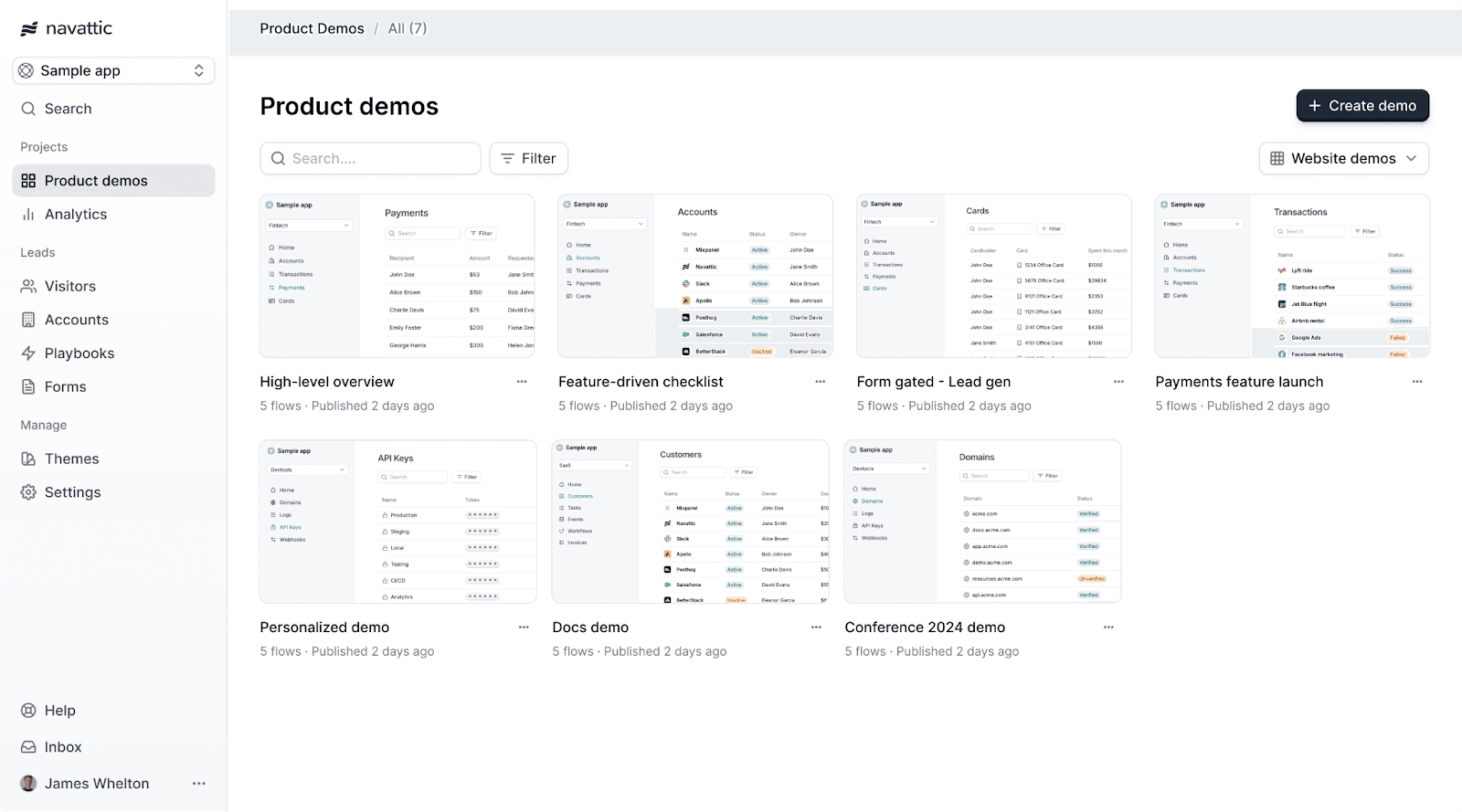
Navattic enables self-guided product exploration through interactive demos that prospects can use anytime.
It helps buyers understand value earlier and gives sellers insight into buyer interests.
Key features of Navattic
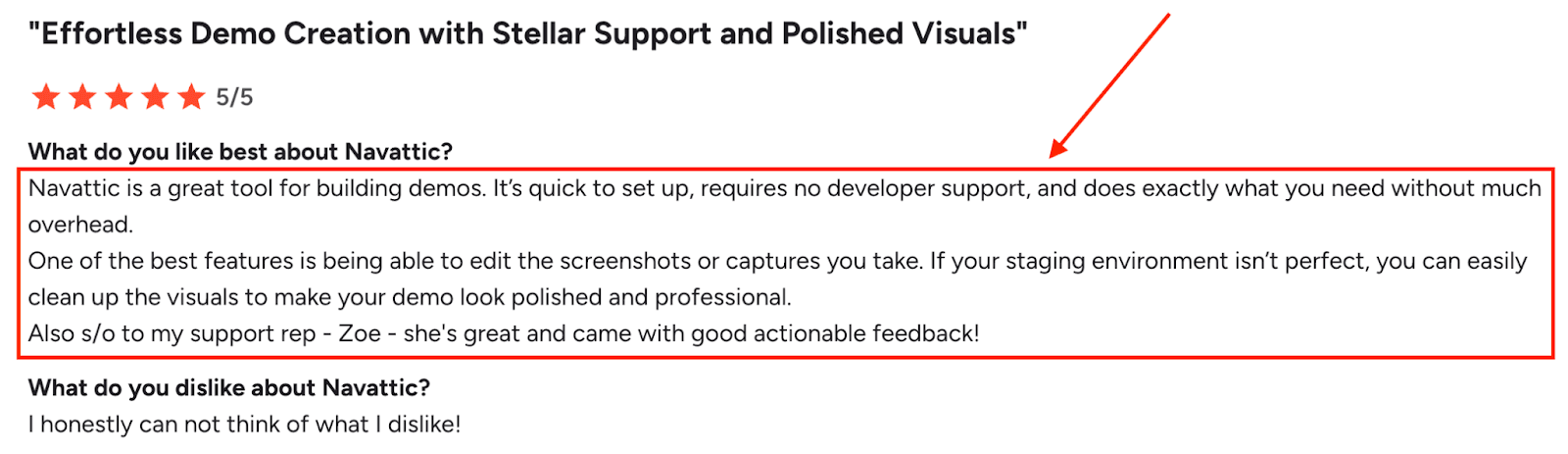
No-code interactive demo builder: Capture your product’s interface exactly as it appears and add guided steps, tooltips, and explanations, all without writing a single line of code.
Personalization and customization: Tailor demos to specific prospects or industries by tweaking text, visuals, or data points. Every buyer sees a version of the product that speaks directly to their needs.
Demo gating and lead capture: Turn demo engagement into pipeline by embedding lead capture forms within demos. Interested visitors who explore your product become qualified, high-intent leads automatically.
Multi-channel distribution (Launchpad): Host demos in a central library or share them anywhere (on your website, in outbound emails, or as follow-ups after calls), so prospects can experience your product at any time.
Engagement analytics and alerts: Track how prospects interact with your demo, from which steps they completed to where they dropped off.
How Navattic helps with sales enablement
Navattic allows enablement teams to create a “gold standard” demo that every seller can personalize and use. This ensures that messaging and product showcases are always accurate, consistent, and aligned with marketing.
For reps, Navattic doubles as a discovery and preparation tool. By sending an interactive demo ahead of a meeting and analyzing the prospect's click-through behavior, the rep understands exactly which features the buyer cares about most. This allows them to focus on specific customer pain points during live calls and show exactly how the product solves them.
Best for: SaaS teams accelerating early-stage discovery.
💡With Spekit, reps can instantly act on Navattic demo data. You can embed practical follow-up tips and personalization cues inside Salesforce, giving reps clear direction on how to tailor their outreach to each prospect’s interests.
Customer review
Second Nature – AI role-play for scalable skill practice
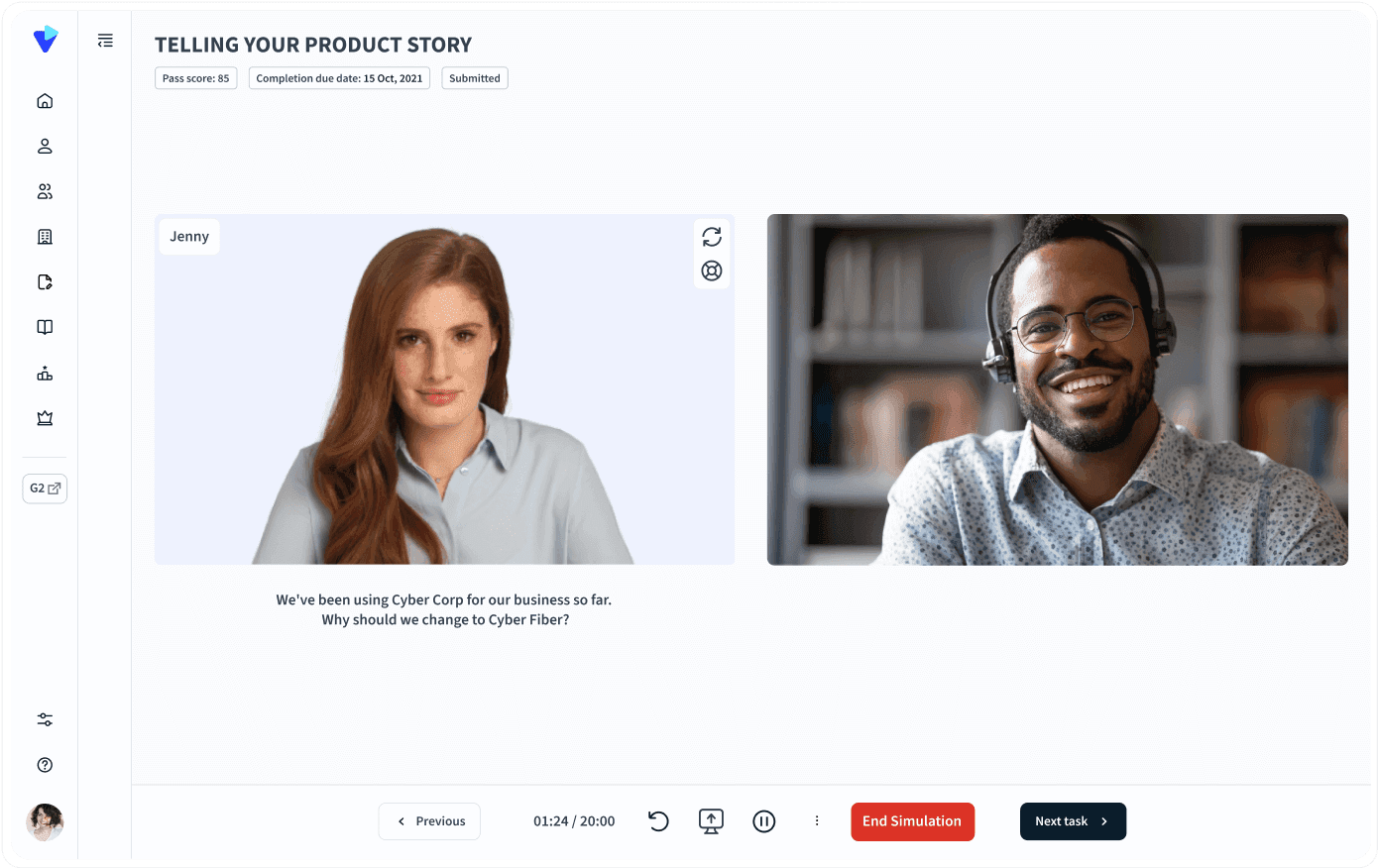
Second Nature provides realistic AI simulations so reps can practice conversations, handle objections, and refine messaging.
It’s effective for building confidence and consistency without heavy manager involvement.
Key features of Second Nature
AI-powered role-plays: Lets reps engage in natural, two-way conversations with an AI avatar that behaves like a real customer. It challenges them with questions, objections, and scenarios that mirror real sales calls.
Customizable scenarios and avatars: Enablement teams can tailor training to their specific sales process, product, or audience. They can customize the AI’s persona, tone, and difficulty level to simulate different buyer types or deal stages.
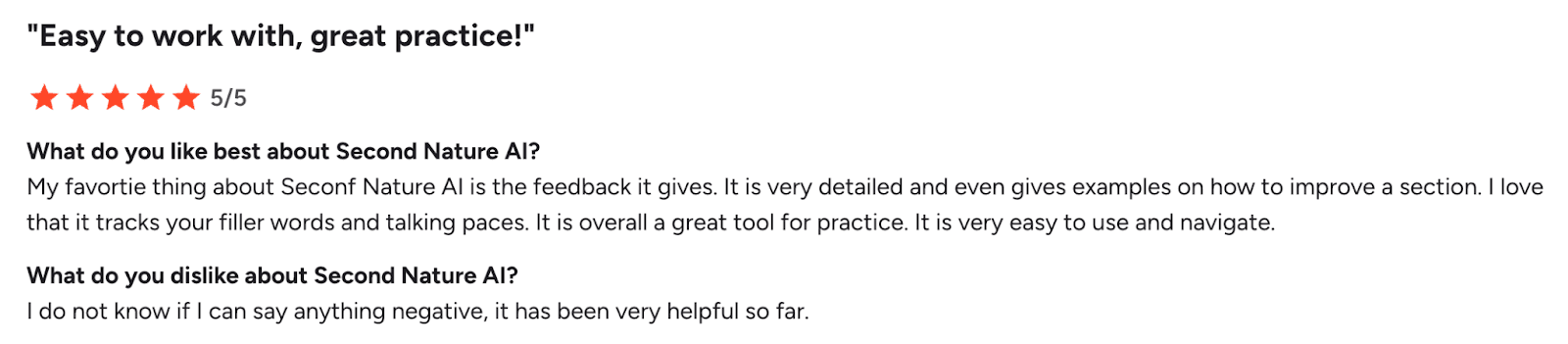
Real-time feedback and scoring: During and after each role-play, the AI provides immediate feedback and objective scoring on elements like tone, confidence, flow, and message accuracy. Reps see exactly where they excel and where to improve.
Enablement analytics: Provides dashboards that track rep progress, skill mastery, and performance trends over time, so managers can quickly identify gaps and coach based on real performance data.
How Second Nature helps with sales enablement
Second Nature brings scalability and precision to sales enablement. Enablement teams can roll out AI simulations so every rep gets consistent practice before going live with customers.
For managers, the platform replaces guesswork with clear insights. Instead of reviewing endless call recordings, they can see exactly which reps struggle with certain objections or messaging and focus their coaching where it’ll have the most impact.
Best for: Teams scaling skills practice across large sales orgs.
💡 Spekit reinforces what reps learn in Second Nature by surfacing objection-handling tips, certified pitch templates, and key messaging right inside Gmail, Outreach, or any tool where selling happens, so reps can apply what they’ve learned in real time.
Customer review
Scribe – Automatic workflow documentation for enablement teams
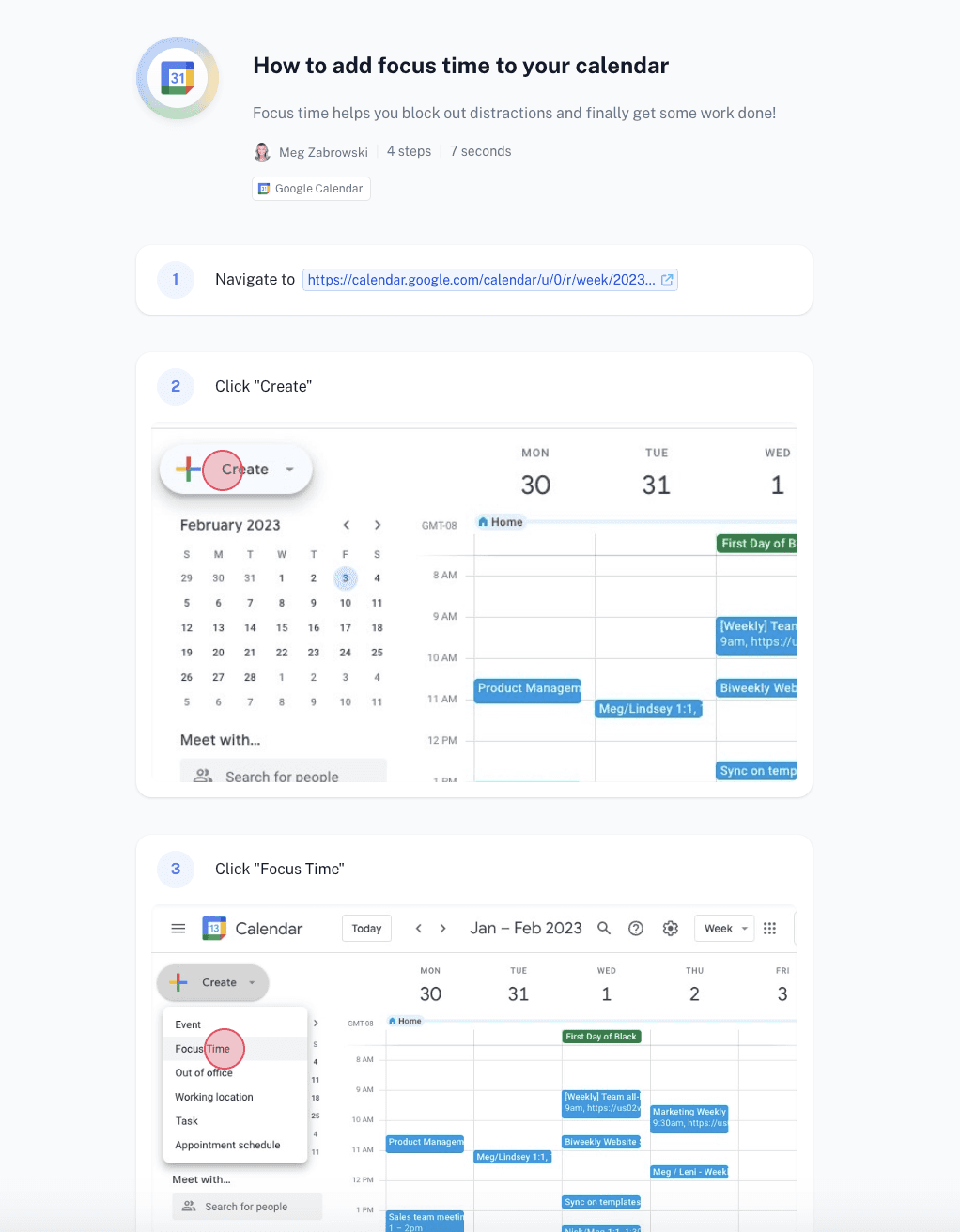
Scribe turns real workflows into step-by-step guides automatically.
It’s useful for documenting CRM processes, internal tools, and operational tasks quickly.
Key features of Scribe
Automatic process capture: Record any workflow in real-time, and Scribe instantly produces a detailed, visual guide complete with step-by-step screenshots and written instructions.
AI generation and editing: Uses AI to generate guide titles, descriptions, and summaries automatically. Teams can also combine multiple Scribes into longer guides or training manuals (called Scribe Pages).
Sensitive data redaction: Automatically detects and blurs sensitive information like personal or financial data in screenshots to keep documentation compliant and secure.
Centralized knowledge hub: Stores all created Scribes in one searchable workspace, giving teams an easy, reliable source of truth for all internal processes.
Flexible sharing and export: Share guides instantly with a URL link, embed them in tools like Guru or Notion, or export them to formats like PDF, HTML, or Markdown.
How Scribe helps with sales enablement
Scribe makes onboarding and training faster by transforming complex, tool-specific processes into clear, visual guides that anyone can follow. Enablement teams can quickly document how to use CRMs, update deals, or manage outreach tools, helping new reps get productive from day one.
By standardizing process documentation, Scribe removes confusion and inconsistency across teams. Reps always know the correct way to complete admin tasks, which means cleaner CRM data, fewer repeated questions, and more time for managers to focus on coaching and deal strategy instead of troubleshooting operational issues.
Best for: Teams standardizing processes and onboarding.
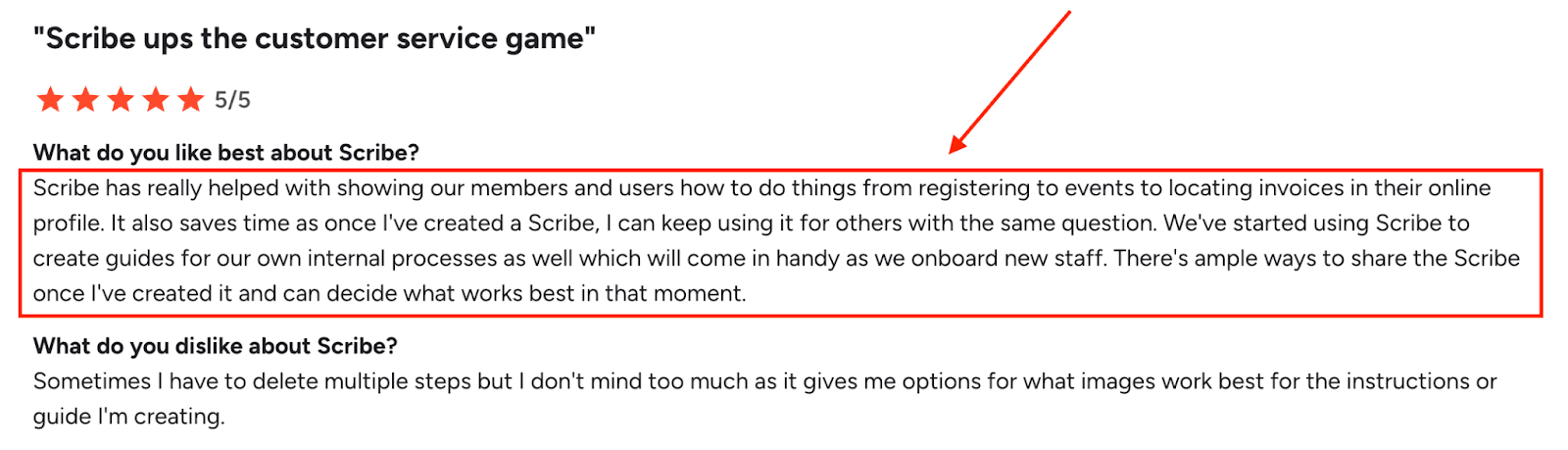
Customer review
Clay – Prospecting intelligence that powers outbound execution
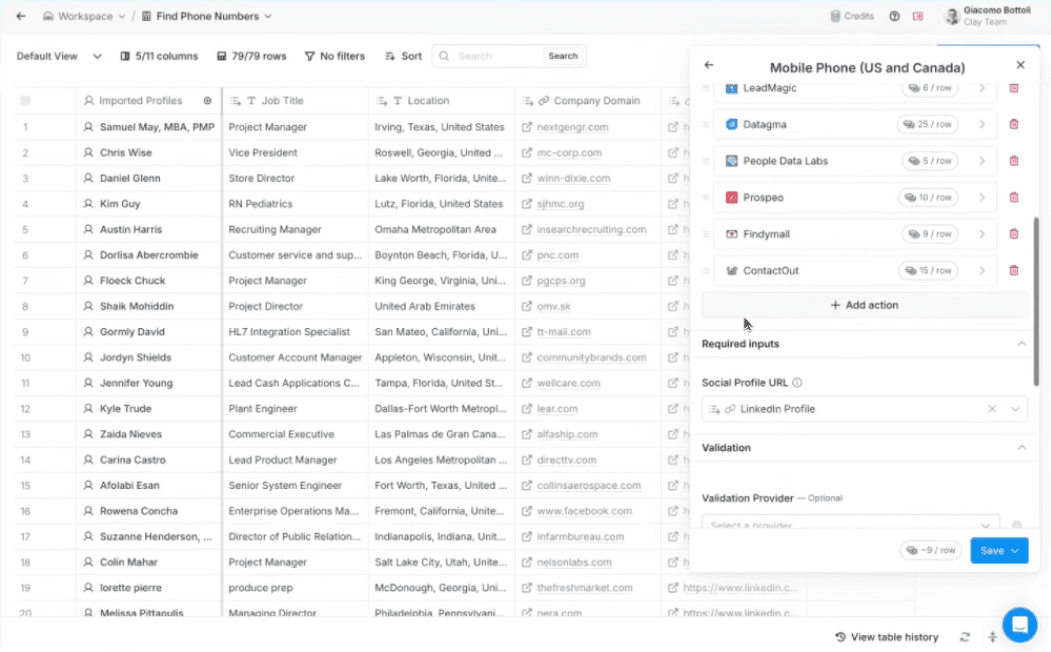
Clay strengthens enablement by ensuring reps work from accurate, enriched data and personalized insights.
It’s not a training platform, but it enables better execution by improving data quality and outreach relevance.
Key features of Clay
Data enrichment: Combines and cross-verifies data from 50+ sources like LinkedIn, Apollo, and Clearbit. Clay’s waterfall logic ensures every contact and company record is accurate and complete.
AI research agent (Claygent): A built-in AI web scraper that can dig up niche insights, like tech stacks, news mentions, or open roles, directly from the web, giving reps real-time context for their outreach.
AI-powered personalization: Applies large language models (like GPT) to enriched data to craft tailored icebreakers, talking points, and outreach messages at scale.
Clay tables and workflows: Offers a flexible, spreadsheet-like interface where users can organize, filter, and automate their data processes. It acts as the central workspace for building and refining target lists.
Workflow automation: Automates key data tasks, like scoring leads, cleansing records, or triggering CRM updates, so reps can spend more time selling and less time managing records.
How Clay helps with sales enablement
Clay empowers sales enablement teams by eliminating one of their biggest obstacles: bad data. Even the best messaging and training fall flat if reps are working from outdated or incomplete lists. Clay fixes that by giving teams accurate, enriched data they can trust, which makes outreach more targeted and productive.
Clay standardizes how reps build and manage prospect lists. Instead of relying on expensive data vendors or manual research, teams can easily create high-quality, personalized lists in-house. This frees up time for leaders to coach reps on conversation skills and deal strategy in preparation for outreach.
Best for: Outbound teams running personalized, data-driven campaigns.
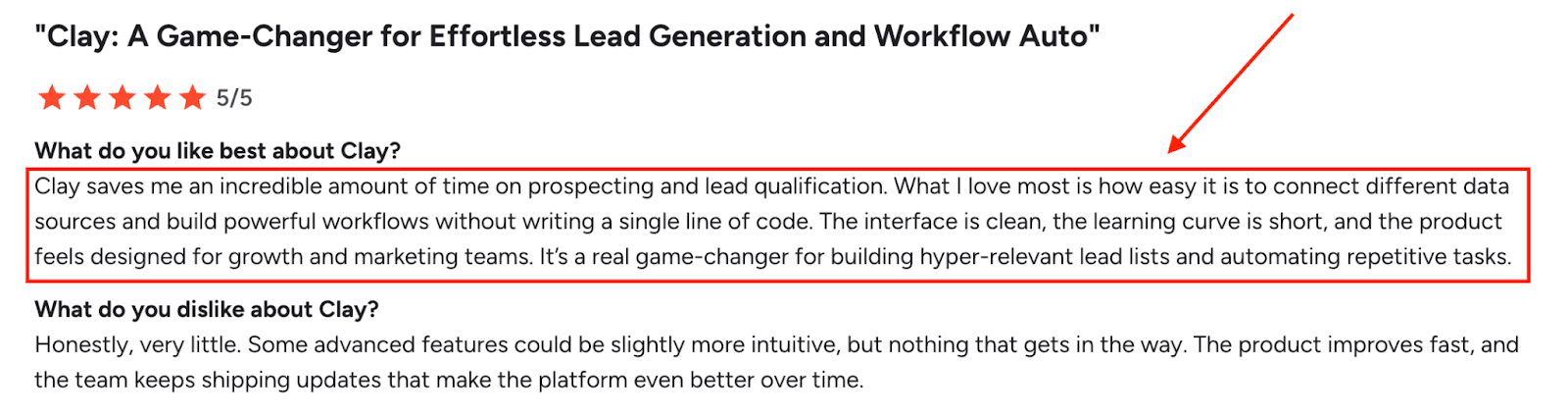
Customer review
Trumpet – Buyer enablement through digital sales rooms
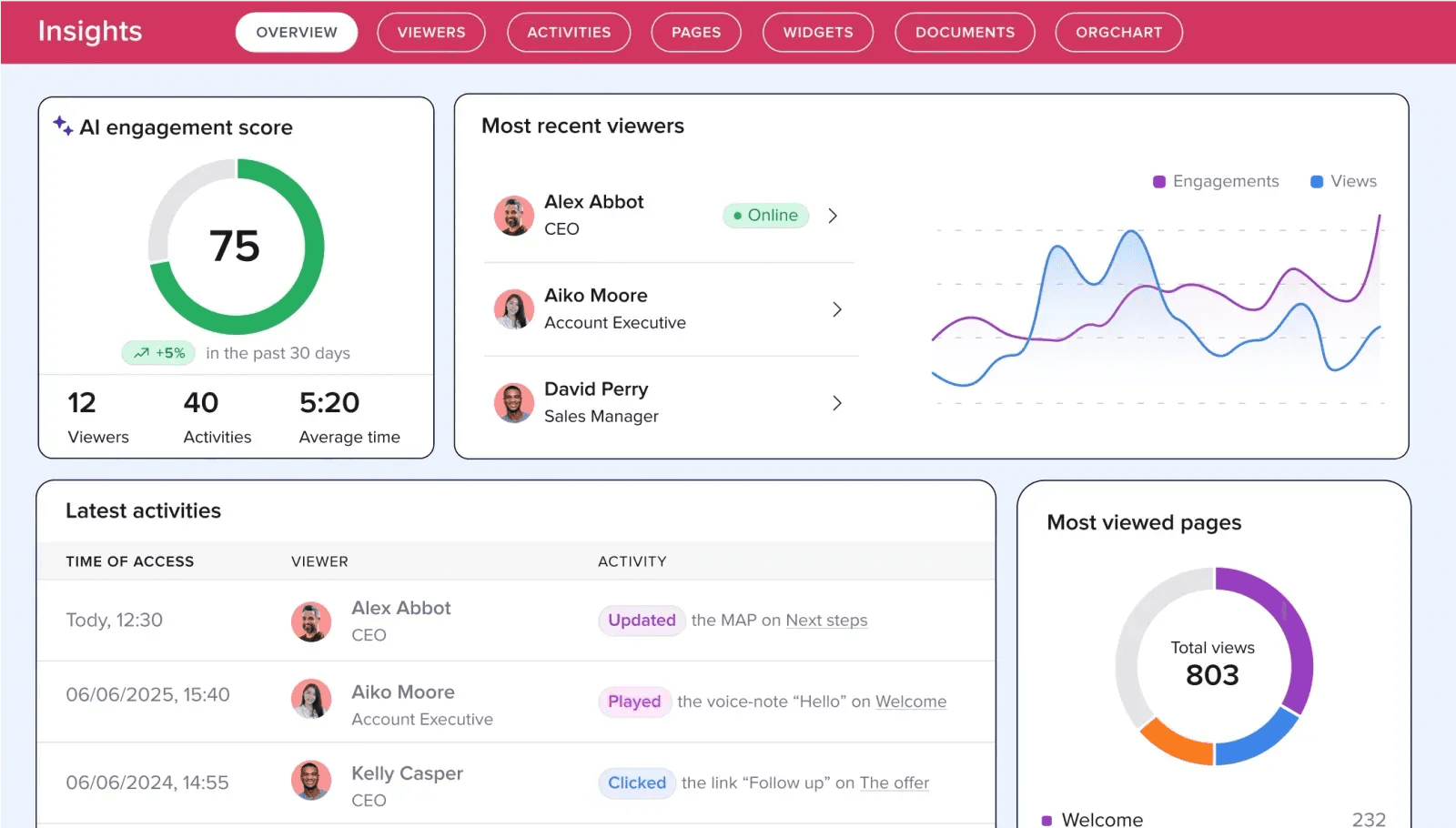
Trumpet creates branded buyer spaces that consolidate proposals, content, and engagement signals.
It helps teams deliver consistent buying experiences and track buyer intent more clearly.
Key features of trumpet
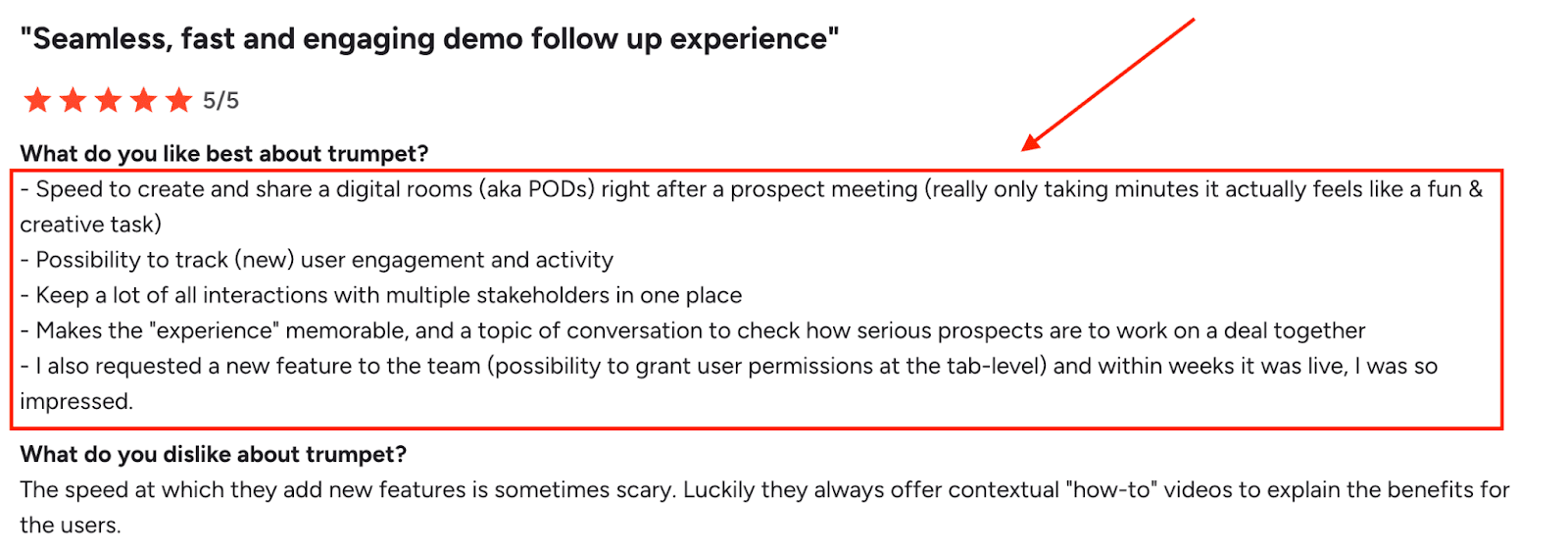
Digital Sales Rooms (Pods): Create customized, branded microsites for each prospect that contain all deal-related content, like proposals, videos, and case studies.
Mutual Action Plans: Replace static spreadsheets with live, trackable action plans that outline next steps, assign responsibilities, and keep both buyers and sellers aligned throughout the deal.
AI personalization & content creation: trumpet’s AI tools (Casey, Composer, and Maestro) automate personalization, generate tailored documents in seconds, and deliver deal insights that guide reps on what to do next.
E-signatures and proposals: Simplify the close by letting reps create, send, and collect e-signatures directly within the Pod, reducing delays and contract friction.
Engagement analytics: Track buyer activity in real time, from who viewed the proposal to how long they spent on specific sections. These insights reveal buying intent and hidden stakeholders that might not surface in CRM data.
How Trumpet helps with sales enablement
trumpet standardizes how reps present and share sales materials at the final stages of the buyer journey. Enablement teams can build approved Pod templates that ensure every rep delivers consistent, brand-aligned, and compliant experiences to buyers.
For managers, trumpet provides clarity into buyer engagement that CRMs can’t capture. Instead of asking a rep, "Did they read the proposal?", a manager can coach the rep based on objective data like, "I see the CFO spent ten minutes on the pricing page this morning—what are we doing to follow up right now?" This data-driven visibility helps managers drive more proactive coaching and accurate pipeline forecasting.
Best for: Teams managing complex, buyer-led sales motions.
Customer review
Choosing the right sales enablement tool for your team
There’s no one-size-fits-all solution. The best sales enablement platform depends on where execution breaks down for your team.
If you need structured training at scale, Allego or Second Nature may fit.
If you coach heavily from calls, Gong provides deep insight.
If your biggest challenge is content sprawl, Guru can centralize knowledge.
If buyer experience is the bottleneck, Dock or Trumpet can help.
But if your priority is consistent execution in the flow of work, Spekit stands apart.
Spekit turns knowledge, context, and coaching into real-time intelligent actions so reps move faster with clarity in the moments that matter.
Book a demo today to see enablement working where selling actually happens.
FAQs
What is sales enablement software?
Sales enablement software helps sales teams access the right content, tools, and training at the right time. Instead of searching through folders or asking managers for help, reps get guidance, playbooks, and insights directly in their workflow, which makes it easier to stay on message and close deals faster.
How is sales enablement different from sales training?
Sales training is the internal process of teaching reps how to sell more effectively and build the necessary skills. But sales enablement focuses on reinforcing knowledge in the flow of work, using tools that surface real-time guidance, content, and feedback as reps sell.
How does AI improve sales enablement?
AI takes sales enablement from static to dynamic. It personalizes learning, delivers real-time guidance inside the tools reps already use, analyzes call performance, and automates repetitive tasks like content recommendations or data entry. This makes learning continuous, feedback instant, and selling more efficient across the entire team.
Which tools help large organizations scale their training programs?
Large or globally distributed sales teams often benefit from Allego or Second Nature. Both use content management, AI-driven simulations, and video learning, to deliver consistent, scalable sales enablement across regions and roles.
How do I know which sales enablement platform is right for my team?
Start by mapping your main challenges. If reps struggle to find content, look for a platform that offers centralized content management, like Spekit or Guru. If your issue is inconsistent messaging or onboarding, tools like Allego or Second Nature can help. And if collaboration with buyers is a pain point, digital sales room platforms like Dock, Trumpet, or Spekit are your best bet.
Learn more
Discover more from the latest posts.